
what
Klubhaus. Made to matter.
Klubhaus is an agency for intelligent live communication.
We create space and time to explore possible futures – and to transform the present.
For people who do not shy away from uncertainty, but see it as an invitation.
For people who do not wait for perfect answers, but bravely ask better questions.
Together. Human. Strategic.
Live communication can do a lot – and often very different things. But it only becomes truly powerful when it grabs you and doesn’t let go.
If you want to explore possible futures, you need more than a standard brief that’s simply been executed.
We start every project with a short workshop – a kind of time-travel exercise. Together, we jump mentally a few months ahead, into a moment where everything we dreamed of has worked. What feels different then? What are participants saying afterwards because they were genuinely moved or inspired? What has changed?
This is how relevant, future-ready concepts with real substance emerge – not as an end in themselves, but as a precise response to the actual goals of the process and the event.
Events and communication truly matter when they don’t just meet expectations. When they surprise us and feel different. When they captivate us and pull us right into the heart of the experience.
Dramaturgy? That’s exactly what it is: a deliberate flow that makes content tangible. It directs attention, sustains tension, and creates meaning. It gives us a sense of direction within the experience – and generates the very pull that draws us in.
At Klubhaus, we understand dramaturgy as an attitude, not a show. As the conscious staging of deliberate disruptions in rhythm, tension, and meaning – for each individual and for the group as a whole. It defines the framework for when, where, and how something happens.
The idea behind the concept becomes reality, and every thought and every design element interlock. Every moment contributes to the whole. Everything follows an inner logic – with a clear flow and room for the unexpected.
Dramaturgy fills space and time with energy.
Moments that bring people together are what matter when it comes to exploring futures together. That’s when an agenda can do more than just provide structure. It becomes a starting point for progress.
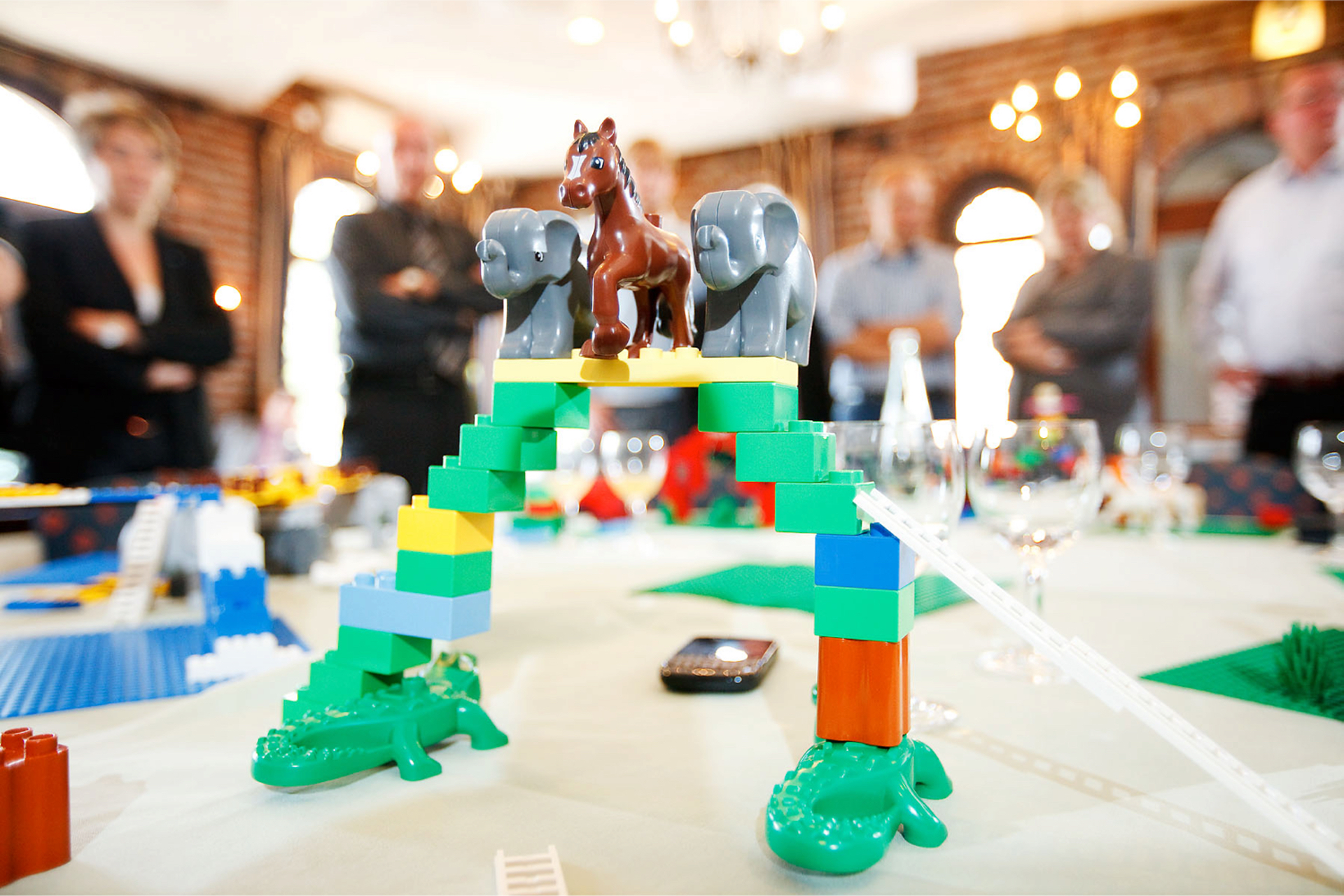
The art of shaping this progress, designing a meeting that invisibly carries people from A to Z—is what we mean by meeting design.
It creates space for productive collaboration. With methods that carry us forward without limiting us. With conversations that achieve more than mere agreement, unleash energy, and enable new ways of thinking.
Good meeting design thinks ahead: it creates formats with attitude.
Where many ideas come together, you need the big picture – and a clear goal in mind. Good project management brings structure to complex processes, creates clarity, and keeps everything moving.
Not with rigid plans, but in a dynamic way. With open communication, in an exchange as equals, working towards solutions that keep evolving.
For us, project management is like conducting an orchestra – balancing resources and emotions. The experience becomes the natural outcome of meticulous preparation.
For us, good project management means enabling rather than restricting. We listen, grasp the context, and engage with everyone involved – without ever losing sight of the participants’ perspective.
We craft ideas for specific occasions: some are designed for a single moment, others are meant to have a lasting impact.
They grow with the people, the questions, and the energy that emerges in collaborative work. Along the way, concepts that start out as one‑offs can evolve into formats that offer guidance, enable participation, and drive change.
The following formats have proven their value – in different variations and contexts, and with very diverse teams. Not as rigid constructs, but as living frameworks that create momentum and enable dialogue – grounded in reality, with a clear stance and depth.
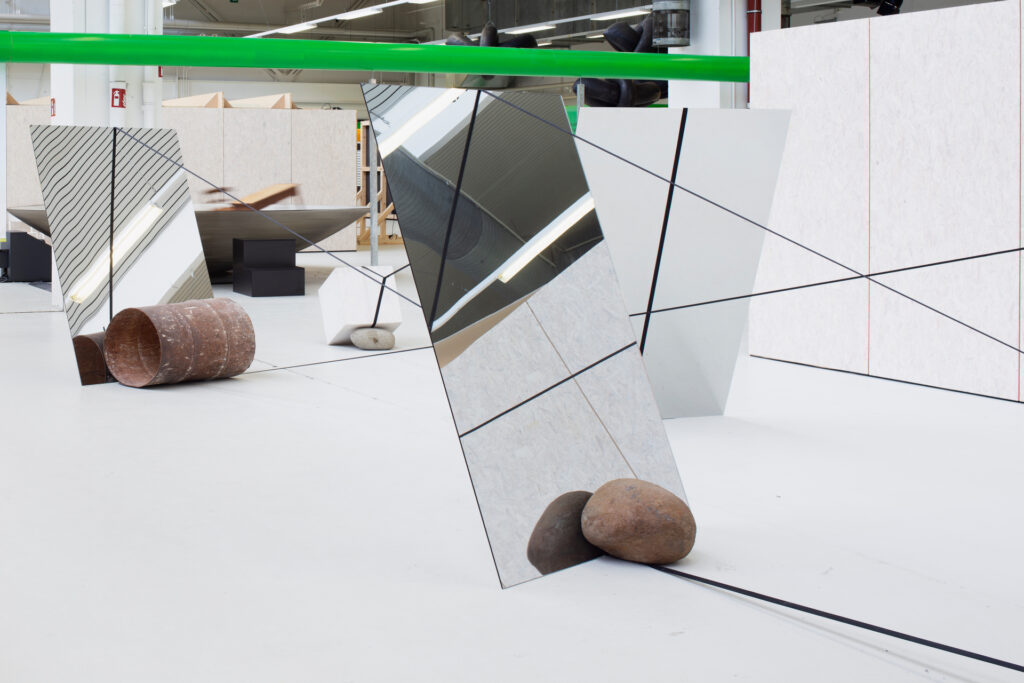
What happens when we don’t explain change – but experience it? When we don’t avoid uncertainty, but consciously allow it?
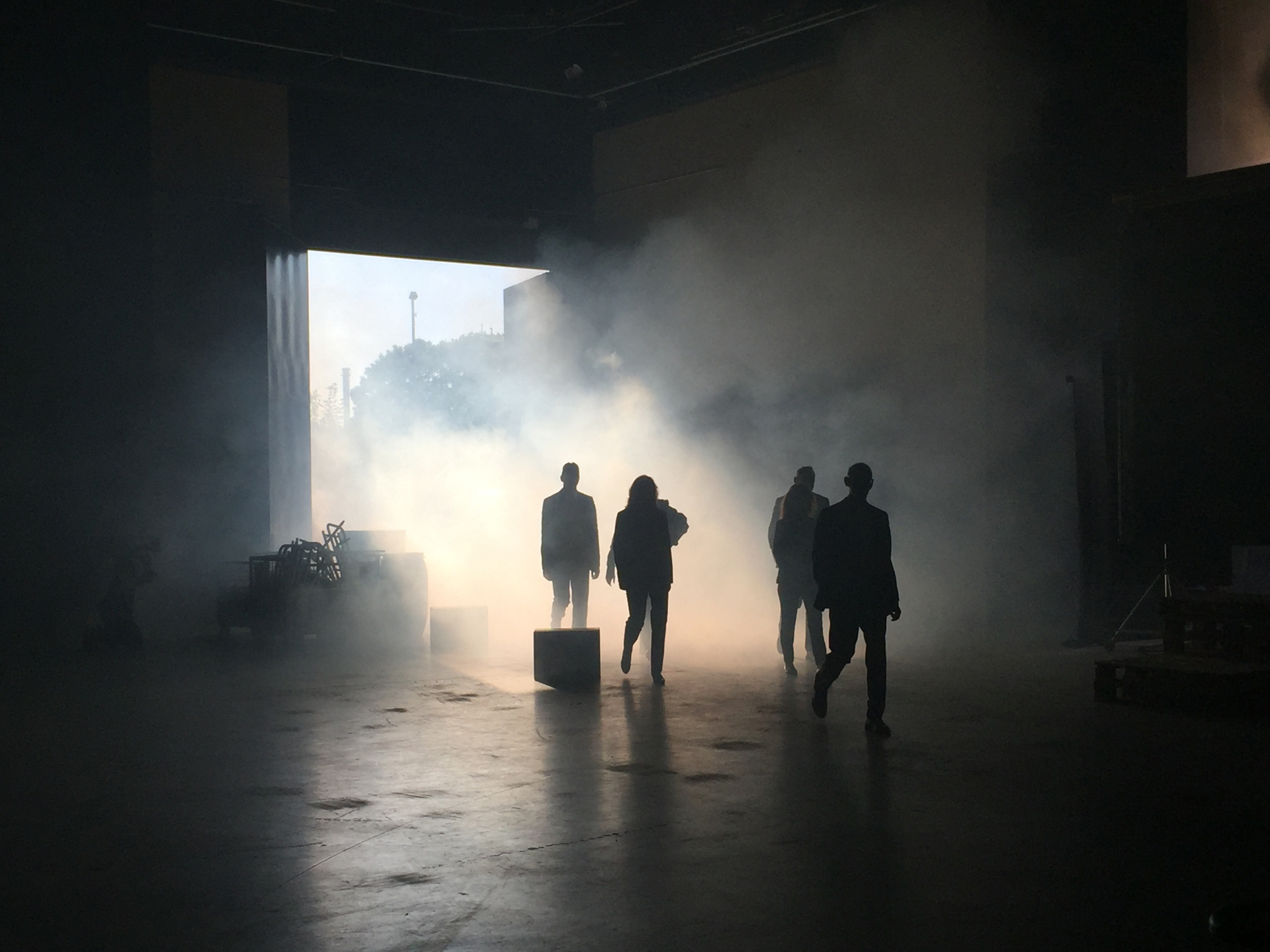
Here, art becomes a catalyst: for disruption, for reflection, for movement. A quiet process that makes an impact – not loud, but deep.
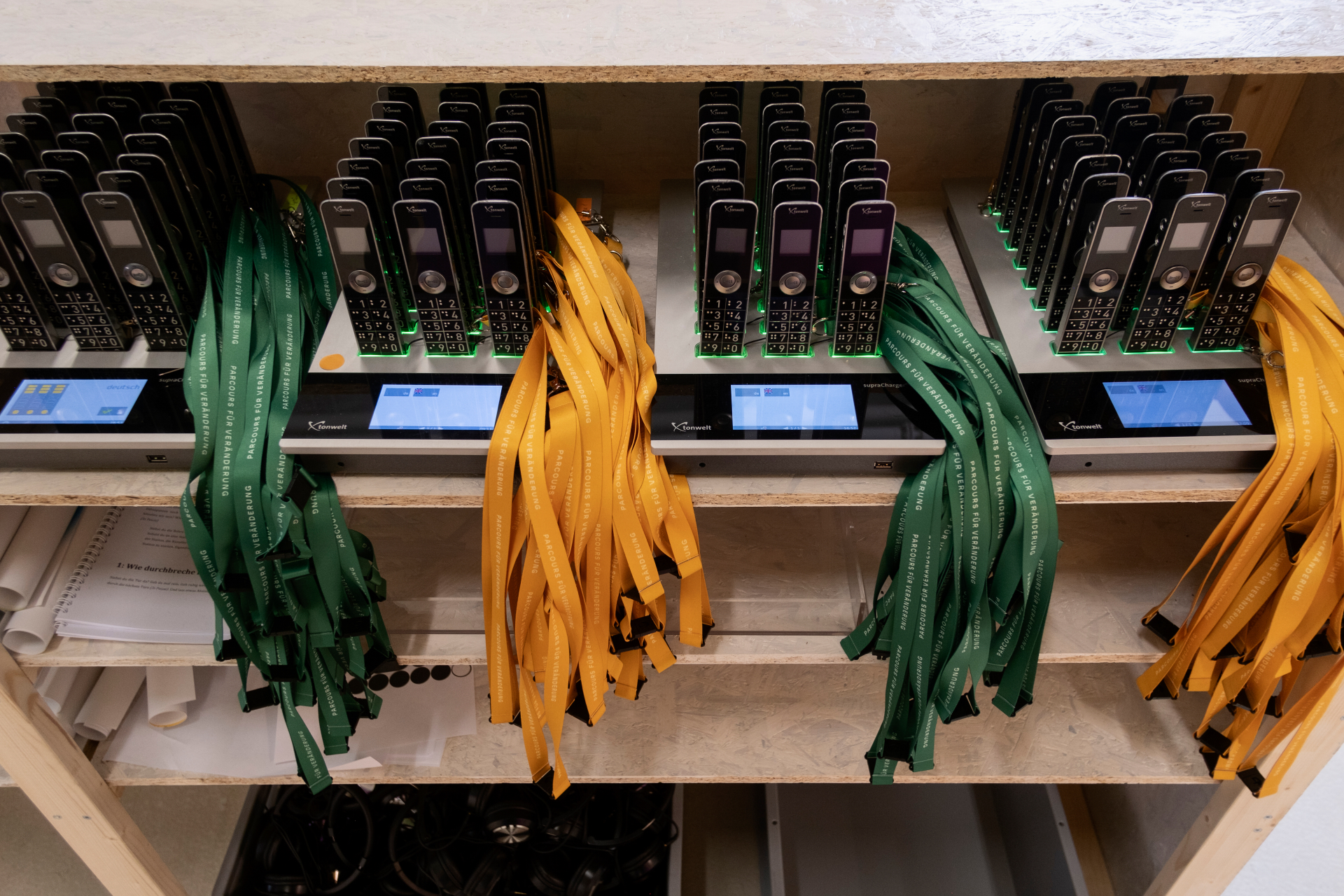
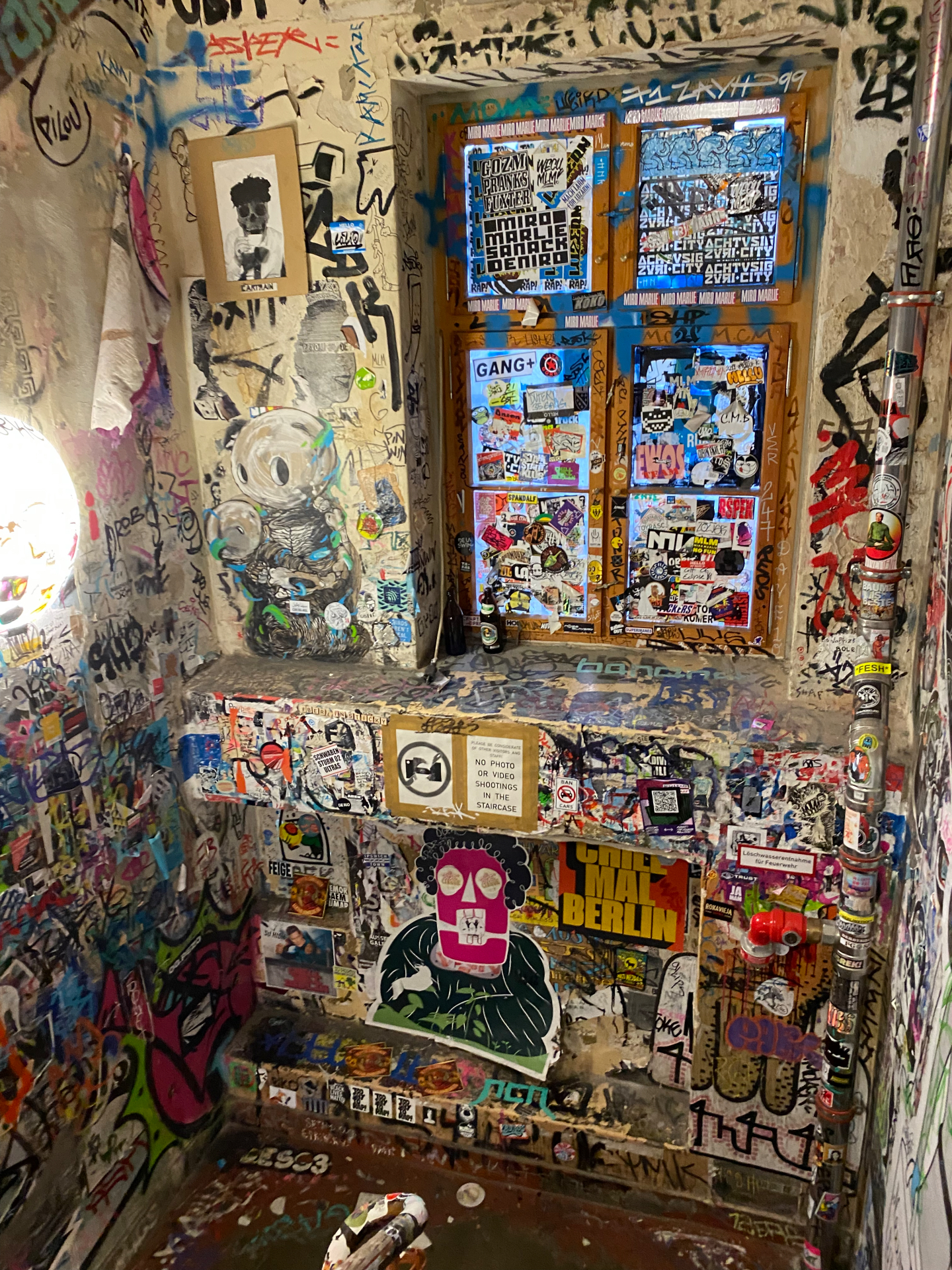
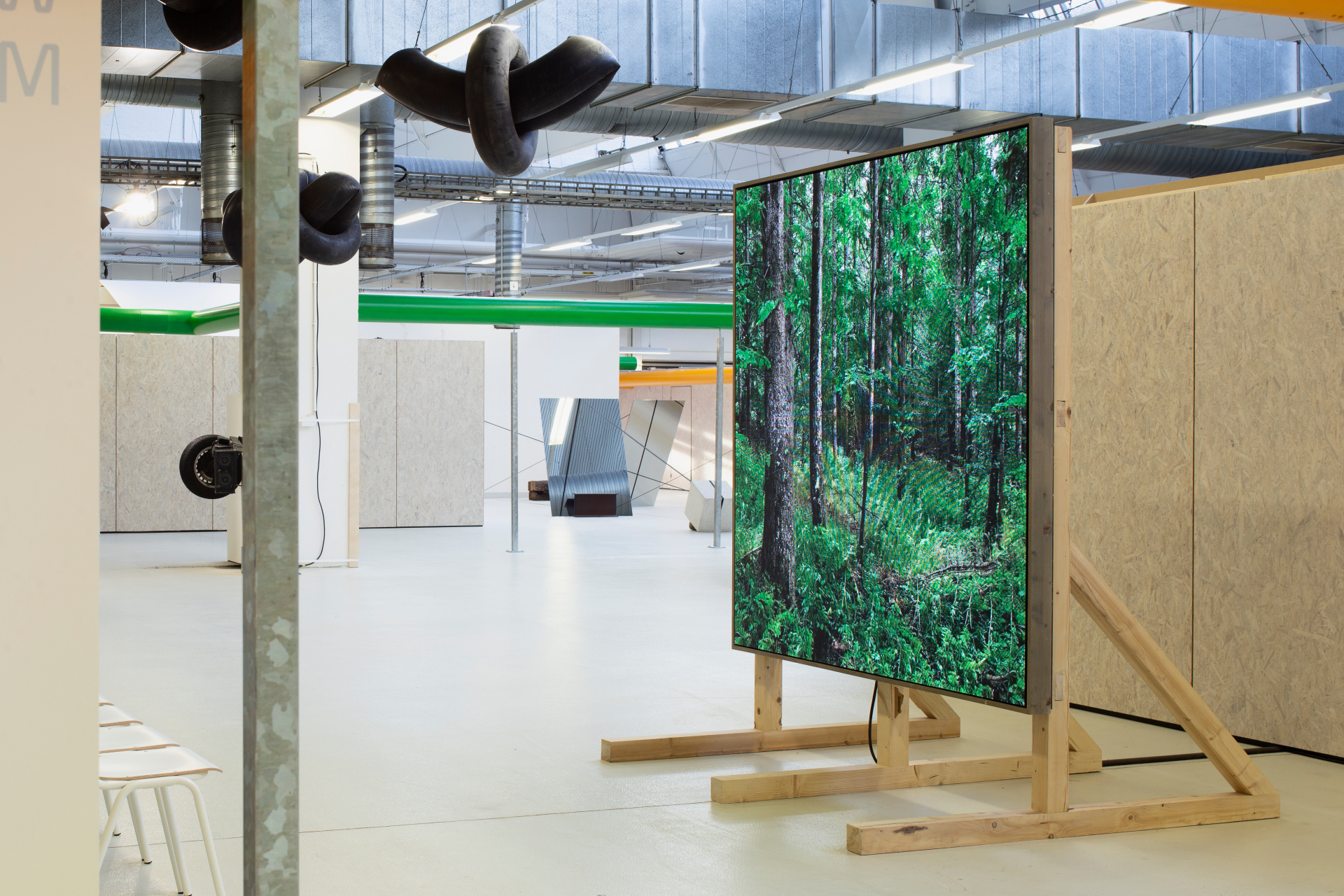
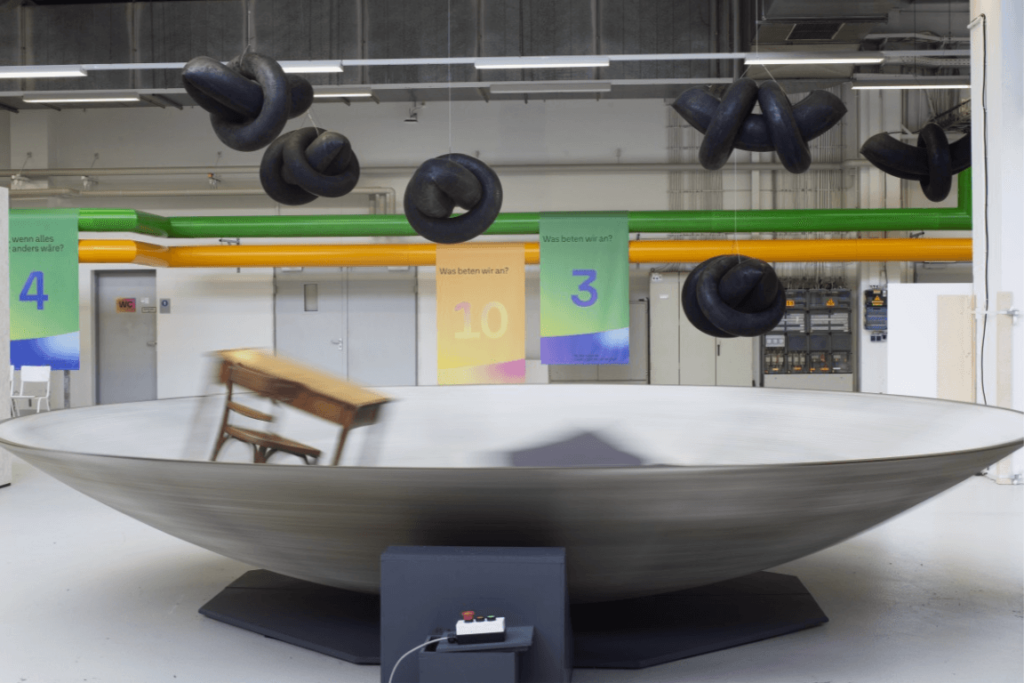
In close collaboration with artists, we translate the pressing questions of our time into a kind of “wake-up trail” that invites people to step onto new paths.
Through its installations, the Parcours for Change becomes a space of experience for leadership – beyond stage, slides, and bullet points. Instead of a concept, an impulse. Instead of certainty, a moment of pause. Instead of answers, there are questions:
- What does it feel like to revolve only around myself?
- How hard is it for me to embrace something new?
- What if everything were completely different?
- How much risk am I truly willing to take?
- …and more.
The format was initiated as part of Vorstellungskraft X, an initiative by Dr. Torsten Fremer (who founded Klubhaus in 2008) and, among others, Prof. Dr. Friedrich von Borries. It explores how we can lead through uncertainty and design with a clear stance.
Anyone who enters the Parcours leaves with nothing more – and nothing less – than a new perspective on themselves: change does not begin on the outside, but within.
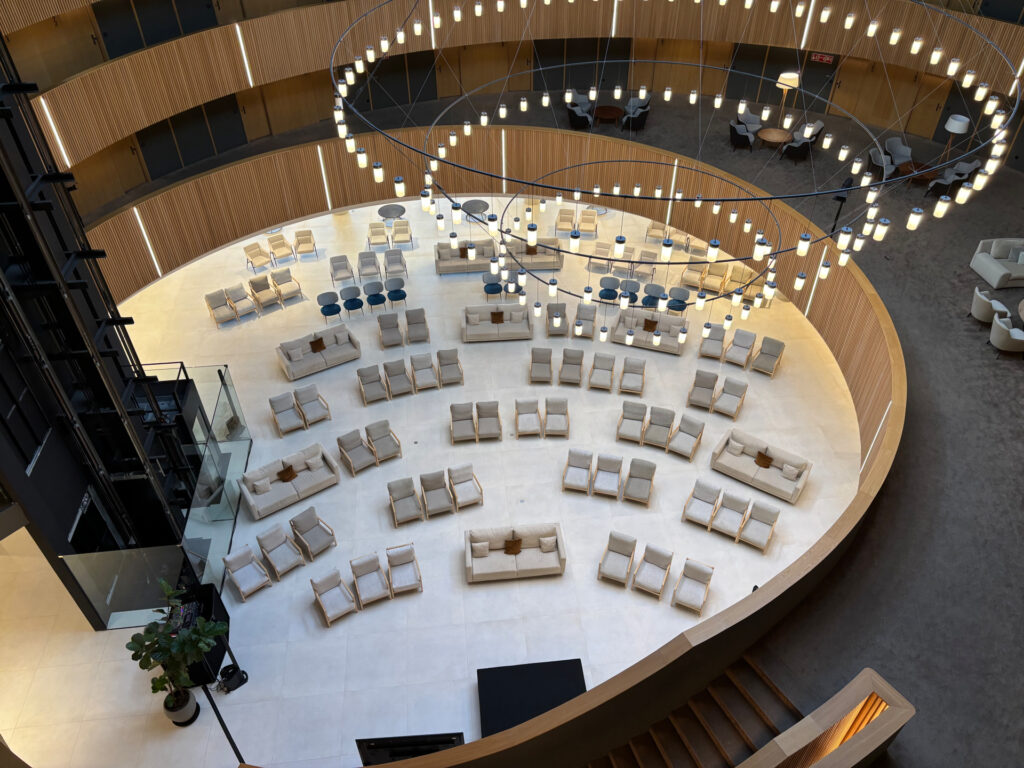
The Future Arena is not a format with a fixed script – it is a space for collective exploration.
Between the big stage and small‑group interaction, between impulses and exchange, movement begins to happen.
The Future Arena creates and uses a dynamic interplay: thinking together at the center, deepening discussions in smaller groups – continuously connected, reflected, and carried forward.
What matters is not a finished concept, but the shared process.
A place for questions that are otherwise too big, too uncomfortable, or too open.
A place for thoughts that need space before they can find direction.
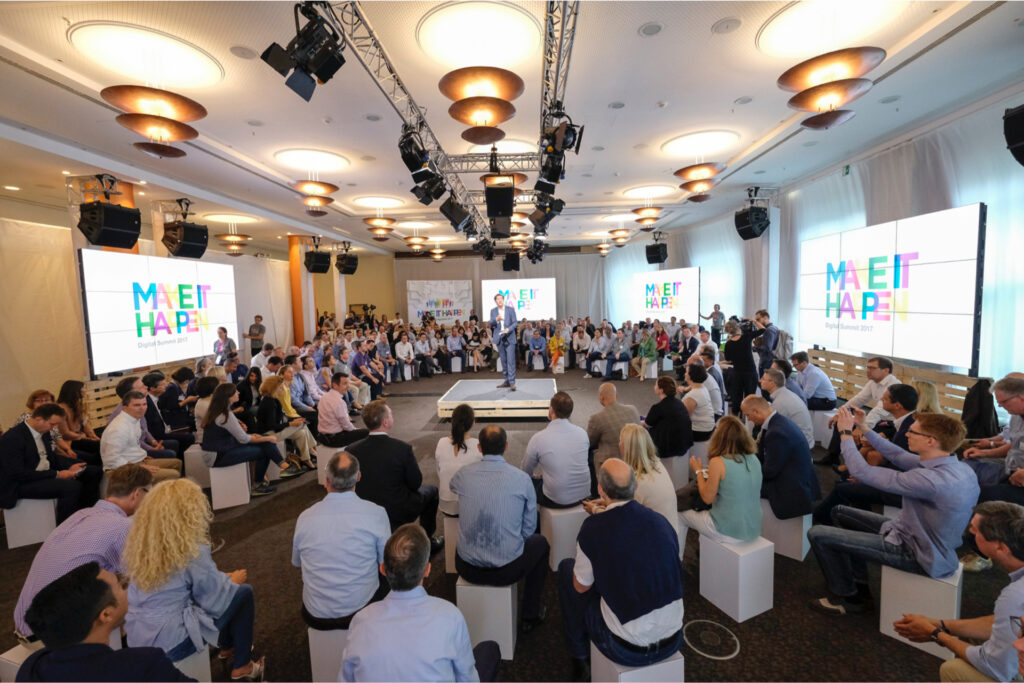
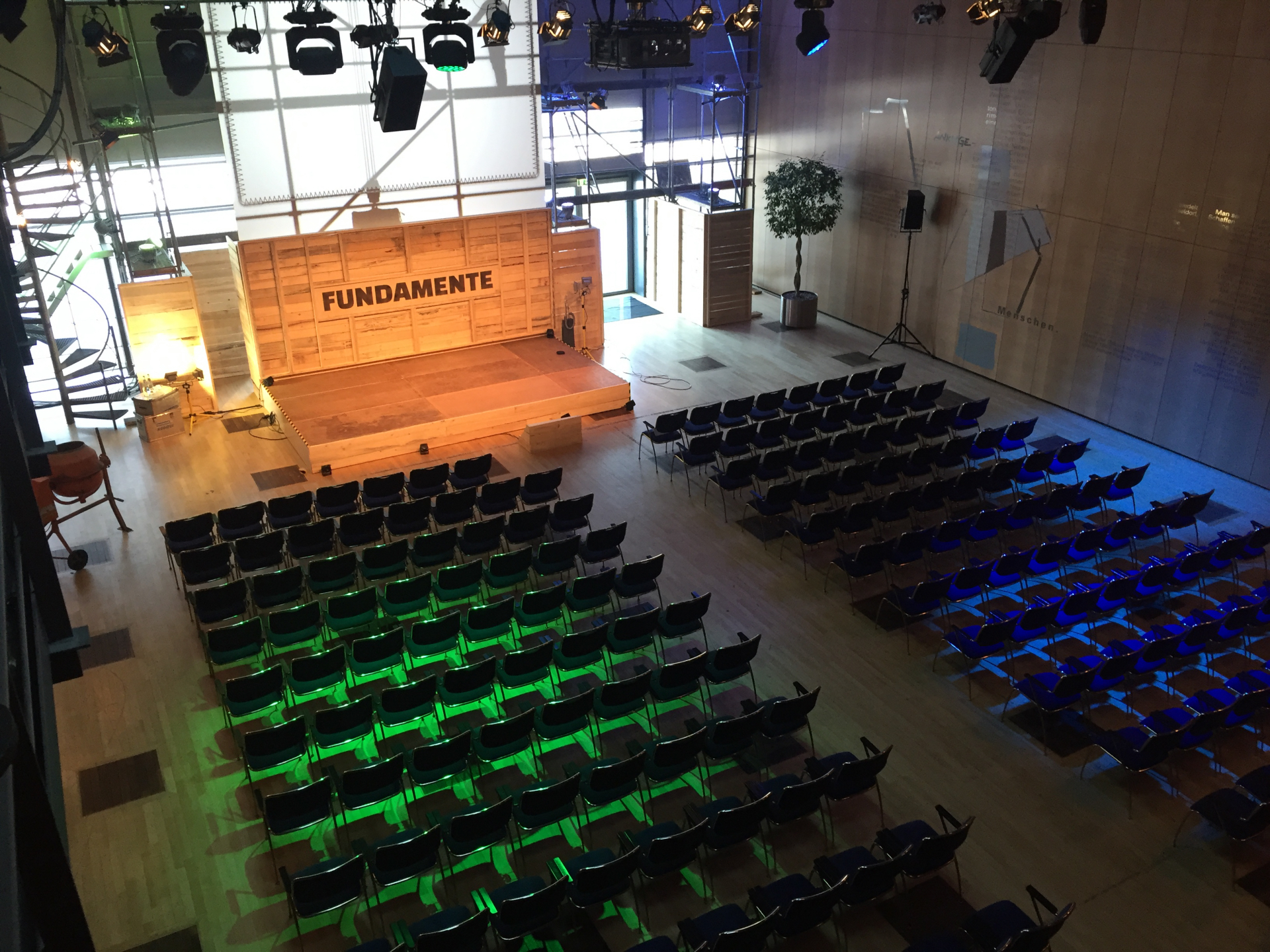
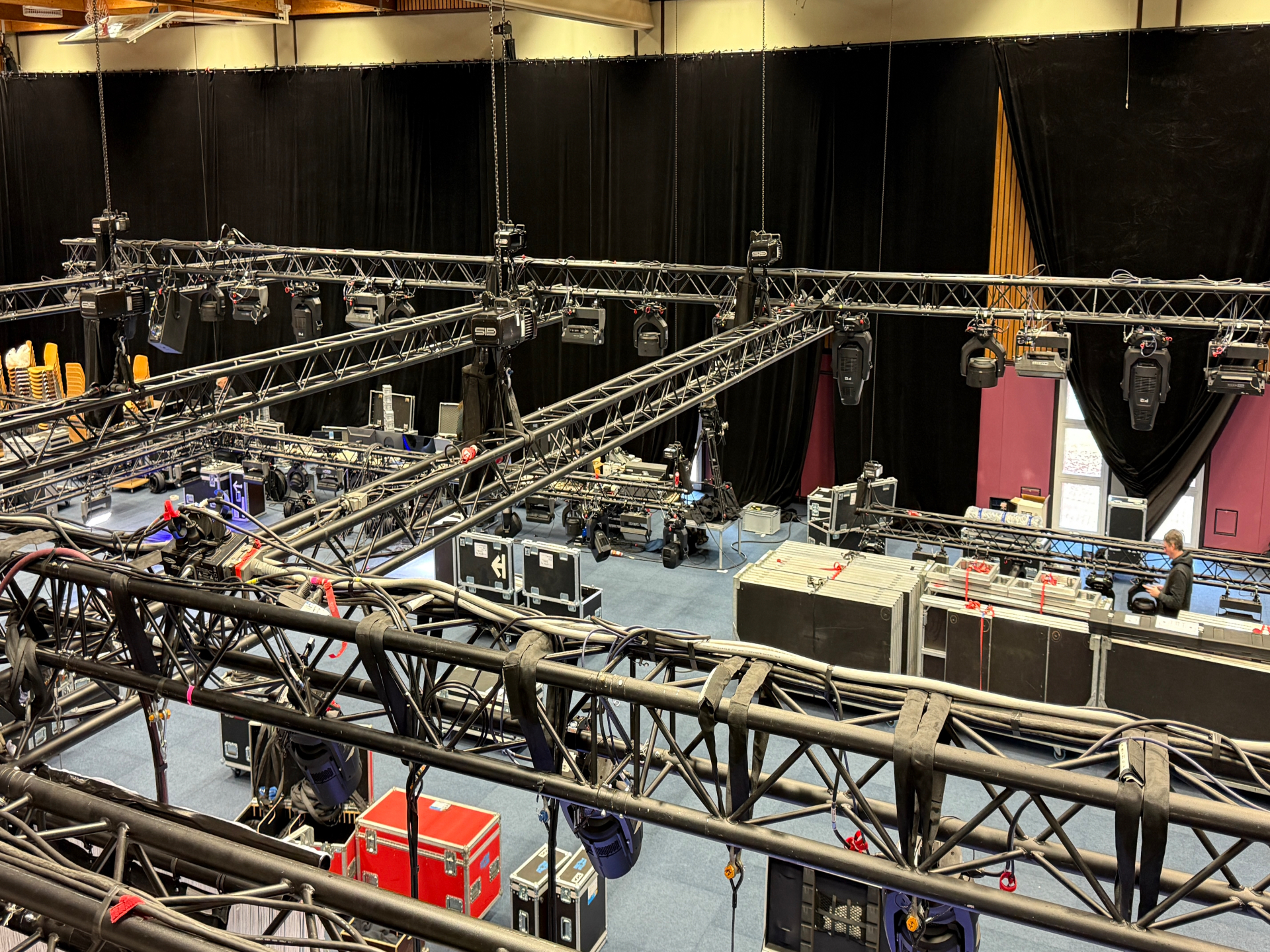
At the heart of the arena lies an open platform: a stage that can become anything – focal point, playground, resonance space. Around it: distributed tables as islands of interaction. People discussing, individually and yet connected through a shared platform that gathers and votes on ideas in real time. Participants are not part of the event – they are its protagonists: visible, approachable, impactful.
In the Future Arena, nothing is presented. Here, we ask, we feel, we focus. And what emerges goes beyond ideas for tomorrow – it creates relevance and courage for the future.
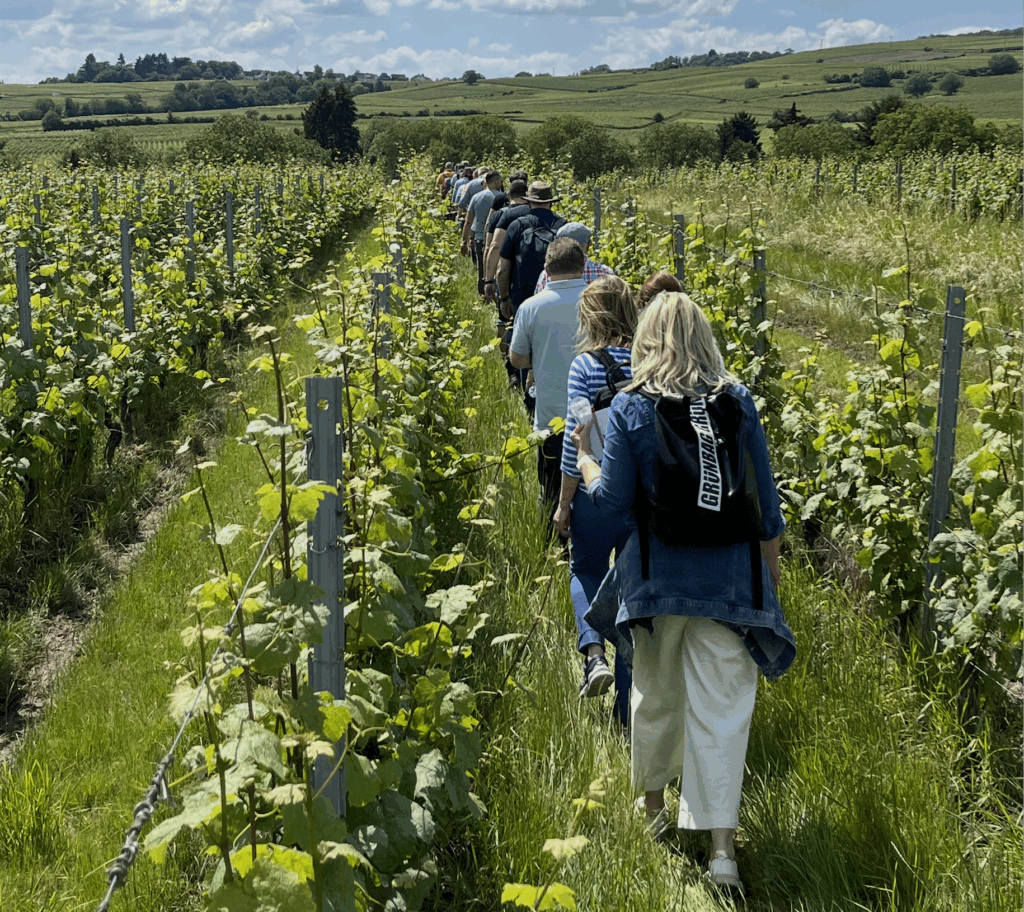
What if leadership began like winemaking – with foresight, patience, and the courage to make early decisions?
In the vineyard, nothing can be rushed. Those who plant vines think in years. Every decision reaches far beyond the moment. Winemakers live with this long‑term horizon – and shape change not in sprints, but in the rhythm of nature.
The Vineyard Experience makes exactly this tangible: leadership away from the daily rush, outdoors in space and wind. A shift in perspective that slows us down – and precisely through that, accelerates what truly matters.
No matter what topics we bring with us. While moving between cellar and hillside, new perspectives open up – adding valuable facets to how we think, act, and work together.
In the Vineyard Experience, it’s not about tools, but about attitude. Not about control, but clarity.
And sometimes, the answer isn’t found in the next workshop – but in a glass of Riesling.
Out of the office. Into real life.
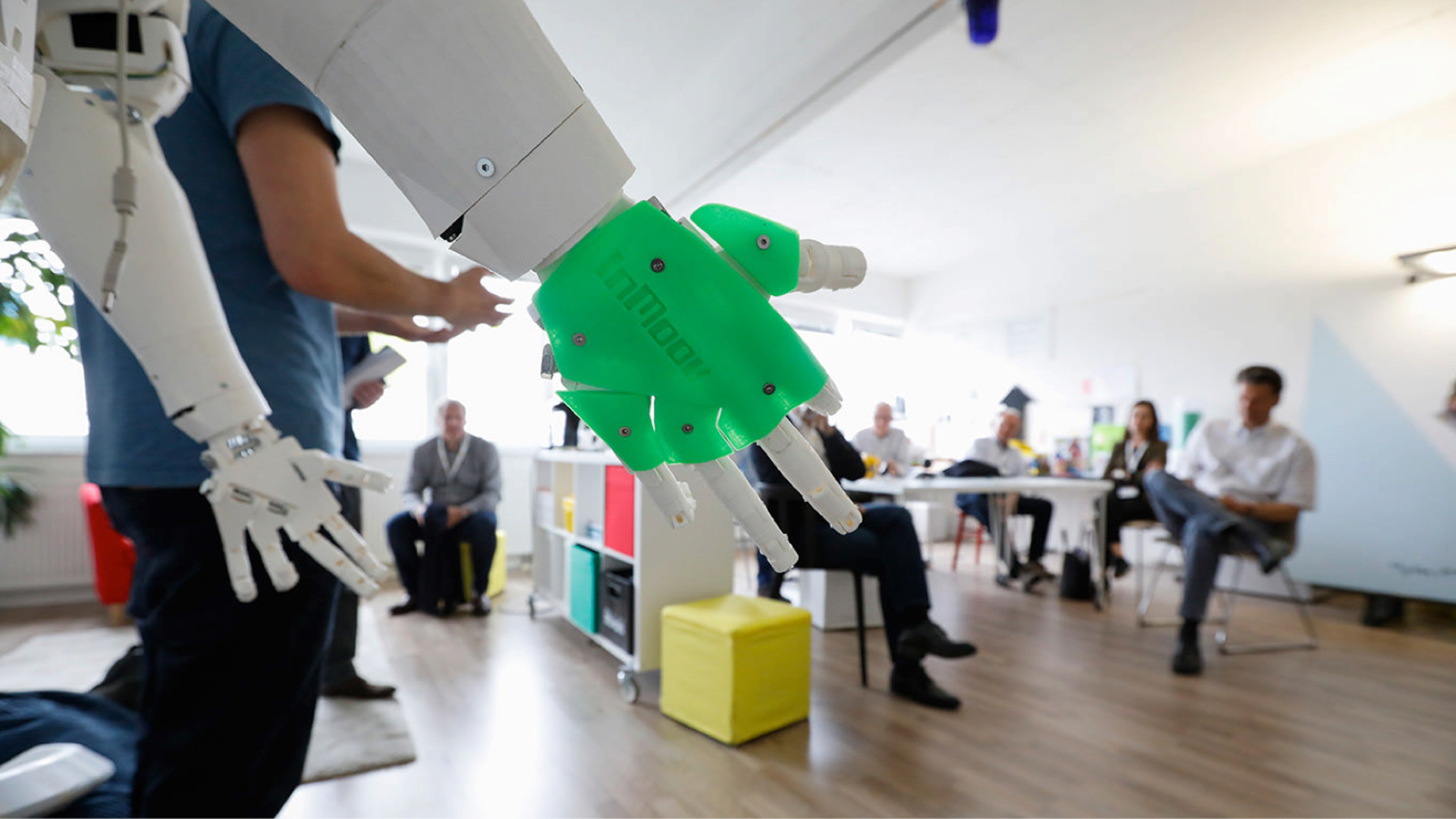
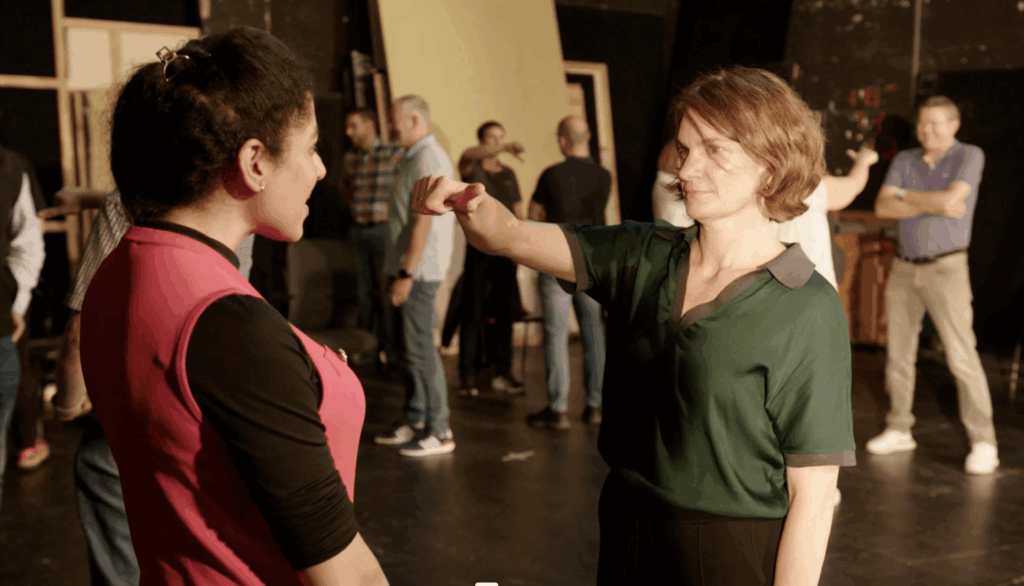
Learning doesn’t happen between PowerPoint slides and coffee breaks – it happens out there, where life is pulsing. Our Learning Journey is an experiential format that gets people moving: mentally, emotionally, together.
Instead of theory, we create real encounters. Instead of front‑of‑the‑room teaching, we open up perspectives. We take teams on a journey to places, people, and stories that inspire and transform – wherever curiosity, change, and innovation can be felt.
The route? It depends on the topic. From artificial intelligence to new work, mindfulness, creativity, or “change as opportunity”: Klubhaus Learning Journeys draw on the philosophy of Otto Scharmer’s Theory U and his M.I.T. approach – taking detours to find new answers to urgent challenges. Because consciously stepping away from the obvious isn’t wasted time; it’s the core of transformation.
Klubhaus Learning Journeys create space for new ideas, real aha moments, and encounters that set things in motion – in people and in teams. And yes, they’re also a lot of fun.
Real questions. New impulses. Shared experience.
For learning that stays. What questions are you searching for new answers to?
Every organization has topics that clearly need to change – and yet, somehow, they don’t really move. Things get stuck, and frustration grows. The ideas are there, but the promised change never materializes. The bad news: this happens in almost every organization.
So what if there were a place where employees and leaders could come together to finally unlock movement in exactly these stuck areas? A space for new perspectives, honest exchange, and concrete next steps? The good news: that space exists.
The Klubhaus Change Factory is an innovative change lab – built for more action and fewer words.
With the Change Factory, we’ve created a format that, within a compact event, triggers exactly what real change needs:
- We build a shared understanding of why change is necessary.
- We create a foundation of trust that supports the shared journey into the future.
- And we close with concrete calls to action for transferring outcomes into everyday business.
In our Change Factory, everyone comes together: employees and leaders. Through a modular structure in four phases, we are able – even in a short time – to design a dramaturgy that leads to collective results.
The four phases of the Change Factory
Phase 1: Why change is so hard – and why that’s completely okay
…for a deeper understanding of why change often feels difficult – and why that is, in principle, absolutely legitimate.
Phase 2: Learning from the best – Masters of Change
…opens up new perspectives and impulses, showing that change can happen faster than we think – if we approach it the right way.
Phase 3: From “What if…?” to a concrete plan
…in real collaboration and a way of working together where everyone involved doesn’t just have a say, but actively co‑creates.
Phase 4: Transfer and Action Plan
…we define concrete steps that can be implemented immediately – and foster a culture of staying committed over time.
What the Change Factory does – and what it doesn’t
The Klubhaus Change Factory makes it possible, in a short time, to look at your organization’s transformation progress from a different angle.
Important: the Change Factory does not replace existing change management structures or transformation strategies. Instead, it lifts the perspective to a meta level that accelerates and sharpens what is already in place.
The Change Factory is a catalyst for transformation and a mindset shifter – from reacting to actively shaping.
What it takes for the Change Factory to succeed
- Leaders who are willing to listen to one another and are open to new ideas and encounters on equal terms.
- Courage to think differently – across boundaries, creatively, unconventionally – to actively initiate change.
- Employees who are eager to get involved and help actively shape the future of their organization.
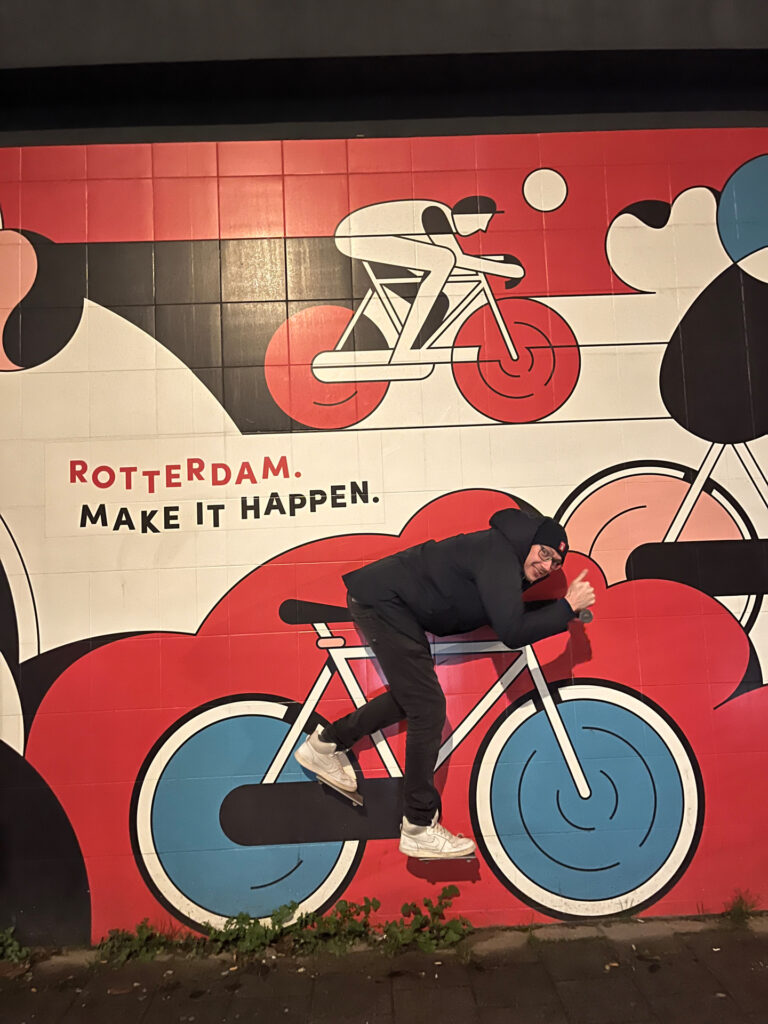
We live and love collaboration. That’s why we actively partner with diverse people, projects, and organizations.
The initiatives that grow from this regularly spark the unexpected and the new – and constantly broaden our perspective.
Imagination is not a luxury. It is a tool, a mindset, and a muscle for change.
This is where Vorstellungskraft X comes in – an initiative by Dr. Torsten Fremer (from Klubhaus), together with Prof. Dr. Friedrich von Borries, Alexander Doudkin, and Ralph Linde.
At its core is a clear conviction: art can do more than inspire – it can shift thought patterns, break routines, and open up new spaces of possibility. In curated parcours, exhibitions, and workshops, artistic thinking meets strategic questions.
At Volkswagen, for example (Parcours for Change), more than 4,000 leaders have already moved through these spaces to renegotiate responsibility, change, and the future – not through PowerPoint, but through experience, friction, and reflection.
The initiative is accompanied by the Monopol podcast “Fantasiemuskel”, in which Friedrich von Borries and Torsten Fremer speak with experts from business, science, politics, and the arts about how imagination and fantasy can help us shape the future more effectively – and what role art can play in that.
Vorstellungskraft X is not an art project. It is an invitation to make transformation tangible – and to approach the future not just by planning it, but by relating to it differently: creatively, openly, and in a radically human way.

The Socratic Kitchen is not a workshop. It is a space for thinking. A conversation lab. A place where we are allowed to ask questions again – in ways that truly set something in motion.
It sits somewhere between philosophy, everyday logic, and surprisingly honest encounters. Sometimes while walking. Sometimes in the dark. Always with an open outcome.
This is where people meet who don’t need polished slides to start moving.
Thinking happens together. Conversations have substance. And what counts is not efficiency – but authenticity.
A space for everyone who doesn’t want to merely manage complexity, but truly understand it. And for teams who care more about meaning than about the next KPI.
The Socratic Kitchen was conceived by philosophers Manuel Scheidegger (Argumented Reality) and Torsten Fremer, managing director of Klubhaus – as an invitation to think differently again.
Not faster, but deeper. Not more efficient, but more relevant.

An alternative journey for your thinking
No show. No front-of-the-room program. Instead, a space where thinking begins differently – playful, honest, and surprisingly close.
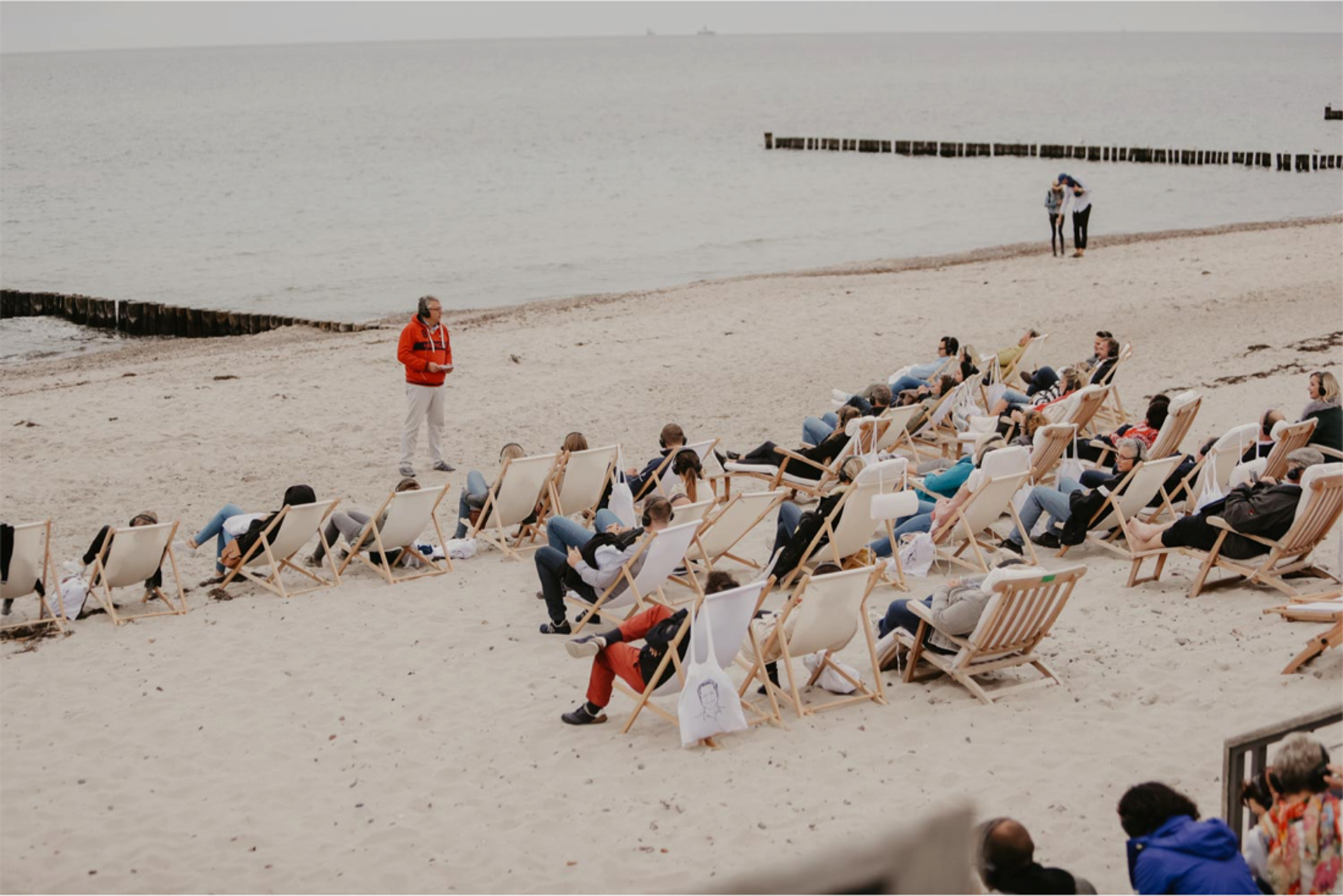
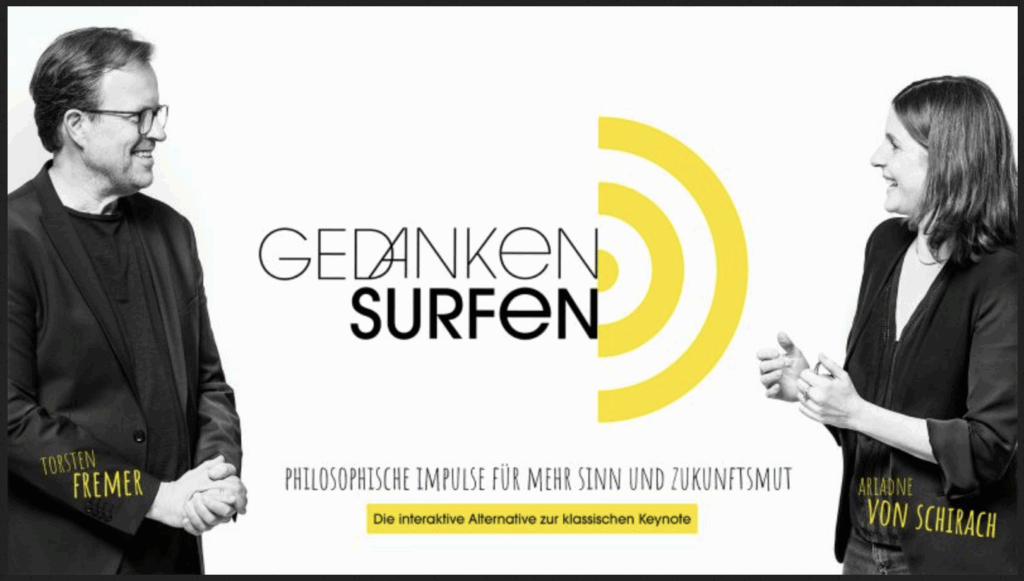
Between searching for meaning and questioning systems, between discomfort and hope, Gedankensurfen (“thought surfing”) invites us to navigate through questions together, instead of chasing quick answers.
Ariadne von Schirach and Torsten Fremer (Klubhaus) offer philosophical impulses – short, clear, and accessible. They open conversational spaces where everything has room that otherwise feels too big, too vague, or too personal.
Whether it’s about meaning or happiness, responsibility or appreciation – the topics are serious, the tone is light. No lecture, no hype. No workshop, no PowerPoint show – but an interactive format that enables thought surfing, where participants can voice and feel their irritations and hopes: you are not alone with your questions – and together, the future becomes braver.
Conversations that stay with you. Thoughts that keep working.
how
How we work
Our concepts emerge in exchange – with people, topics, and goals. Not off the shelf, but thought through for relevance. With a clear stance instead of a checklist. Based on the “Cologne Model” as a foundation for clarity, dialogue, and direction:
Meaning + Culture + Dramaturgy = Energy.
- When people understand the meaning of coming together – and that’s more than “we’re having a meeting.”
- When a culture of togetherness is built – and that’s more than “we’ll do a quick Q&A.”
- Only then can dramaturgy truly capture attention in a lasting way. And that’s when it emerges:
- …this unique energy of momentum and connection. Because real impact happens where people don’t just consume, but actively contribute.
Instead of “same agenda as always”, we create experiential spaces that stop the hamster wheel of frantic standstill. For companies for which “business as usual” is no longer an option. For organizations that don’t just want to think about change, but live it actively.
Make things, not slides.
who
So many different personalities, such diverse characters, such multifaceted life paths.
And that is precisely what defines us, has motivated us for so many years, and drives us forward every day. Sometimes it is challenging, but anything else would be boring and meaningless.
How do you make bold decisions?
I make bold decisions mostly when I fully stand behind an idea – for a project, for our team. And honestly, that happens quite often. Unfortunately, what’s sometimes missing is the courage around me to carry our bold ideas through as radically as they would deserve. And yes, that can be frustrating at times.
But I keep going, because I understand that stepping into the unknown is never easy.
But hey: only those who make bold decisions get rewarded with discovering something truly new.
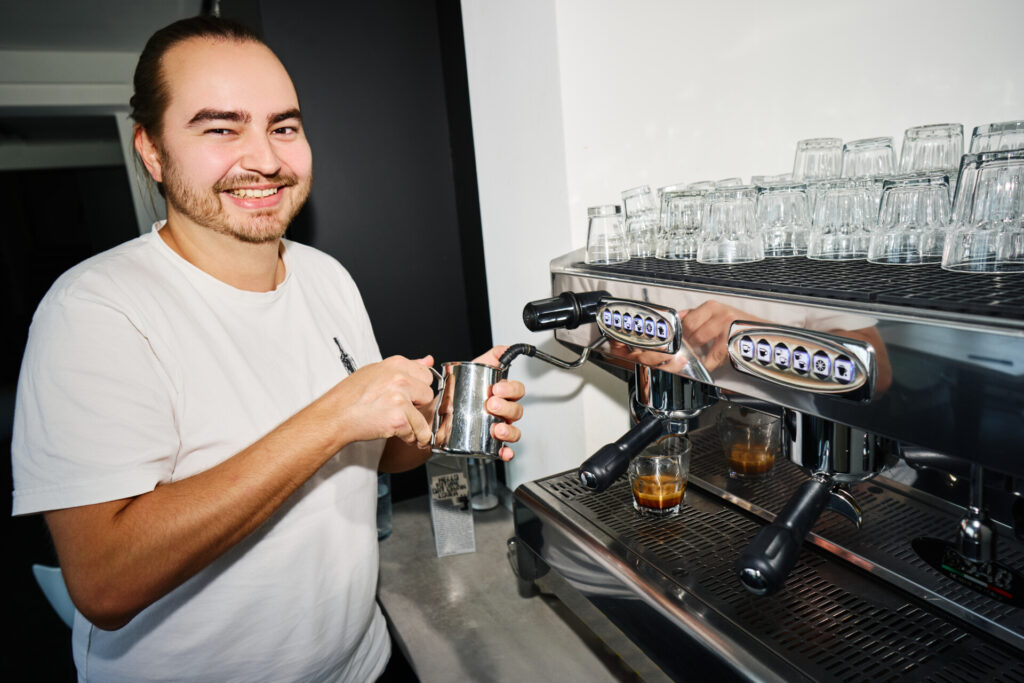
Das Leben ist da, um gelebt zu werden – ehrlich zu sein, sich selbst treu zu bleiben und sich nicht zu verbiegen, tun was einen erfüllt (auch wenn Arbeit dazugehört), und Spaß macht. Weniger Ego, mehr Echtheit und Empathie – das würde uns allen guttun.
How do you bring out the best in yourself?
The best in us unfolds when we dare to dream – and have the courage to step onto new paths without losing sight of what truly matters. When we show up with passion, humor, and just the right amount of ambition.
Because sometimes dipping a cautious toe into the water isn’t enough.
Sometimes you have to jump – to grow beyond who you were before.
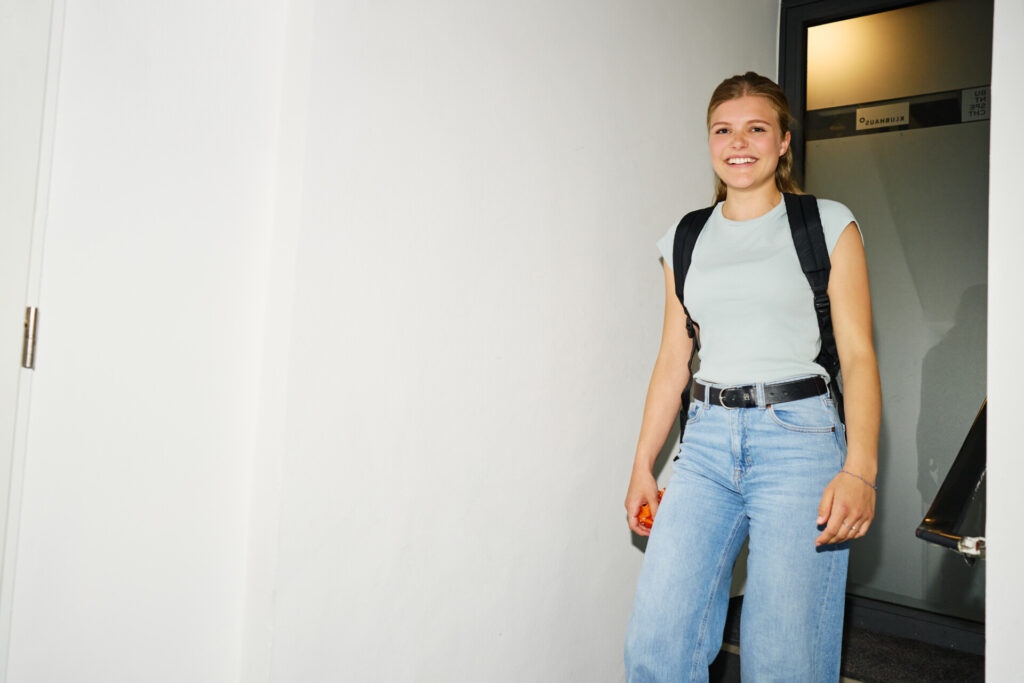
Das Leben ist da, um gelebt zu werden – ehrlich zu sein, sich selbst treu zu bleiben und sich nicht zu verbiegen, tun was einen erfüllt (auch wenn Arbeit dazugehört), und Spaß macht. Weniger Ego, mehr Echtheit und Empathie – das würde uns allen guttun.
What defines you?
It’s said that you become like the people you spend the most time with – no surprise, then, that I’ve absorbed the drive and diversity of our team: creative, individual, future‑minded, and fully in it with heart and intention.
Strengths grow over time.
What do I gladly add to the mix? My positivity, my genuine curiosity – and the joy of encounters that have the potential to become something more. Maybe even friendship.
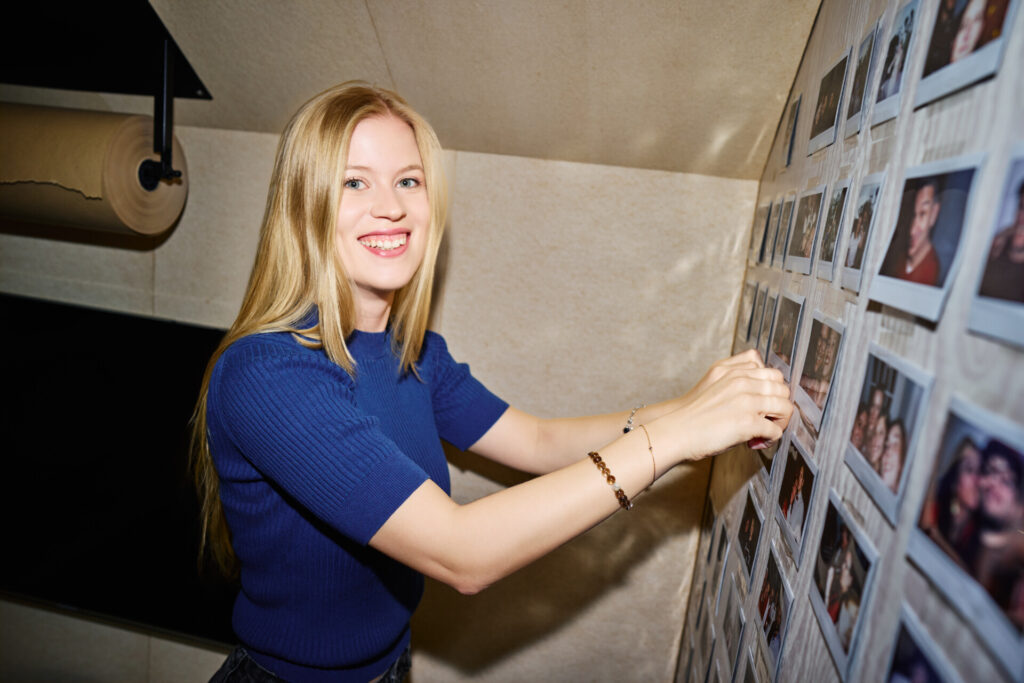
Das Leben ist da, um gelebt zu werden – ehrlich zu sein, sich selbst treu zu bleiben und sich nicht zu verbiegen, tun was einen erfüllt (auch wenn Arbeit dazugehört), und Spaß macht. Weniger Ego, mehr Echtheit und Empathie – das würde uns allen guttun.
What’s life about?
Life is meant to be lived – to be honest, to stay true to yourself, and not to bend just to fit in. To do what fulfills you (yes, work included) and what brings joy.
Less ego, more authenticity and empathy – we could all use more of that.

Das Leben ist da, um gelebt zu werden – ehrlich zu sein, sich selbst treu zu bleiben und sich nicht zu verbiegen, tun was einen erfüllt (auch wenn Arbeit dazugehört), und Spaß macht. Weniger Ego, mehr Echtheit und Empathie – das würde uns allen guttun.
What do you need to grow?
For me, growth happens all the time – through experiences, new responsibilities, encounters with others, and by reflecting on my own actions. It’s important to me to stay open, stay curious, and allow myself to step into change.
At Klubhaus, we constantly meet new challenges – they push me, and they move me forward. Staying close to what’s happening in the world, without letting fixed mindsets slow me down – that’s how growth almost happens on its own.
Standing still? That would be far too boring.

Das Leben ist da, um gelebt zu werden – ehrlich zu sein, sich selbst treu zu bleiben und sich nicht zu verbiegen, tun was einen erfüllt (auch wenn Arbeit dazugehört), und Spaß macht. Weniger Ego, mehr Echtheit und Empathie – das würde uns allen guttun.
How do you know it’s time to change something?
When something feels off – when the vibes are no longer aligned – that’s when I know it’s time to make a change. My gut feeling is rarely wrong.
What exactly needs to change? That part isn’t always easy to figure out. But listening helps. Open communication helps. And an honest conversation with the people around you helps too.
Most of all: being honest with yourself.

Das Leben ist da, um gelebt zu werden – ehrlich zu sein, sich selbst treu zu bleiben und sich nicht zu verbiegen, tun was einen erfüllt (auch wenn Arbeit dazugehört), und Spaß macht. Weniger Ego, mehr Echtheit und Empathie – das würde uns allen guttun.
What do you need to stay optimistic?
For me, optimism means looking at things realistically – seeing them as they truly are. Not forcing positivity, but giving the “not‑so‑good” a place as well. A small one. Near the door. Where it can drift out again.
My optimism grows from the freedom to choose between the positive and the negative.
And to decide, consciously, where I want to put my attention.
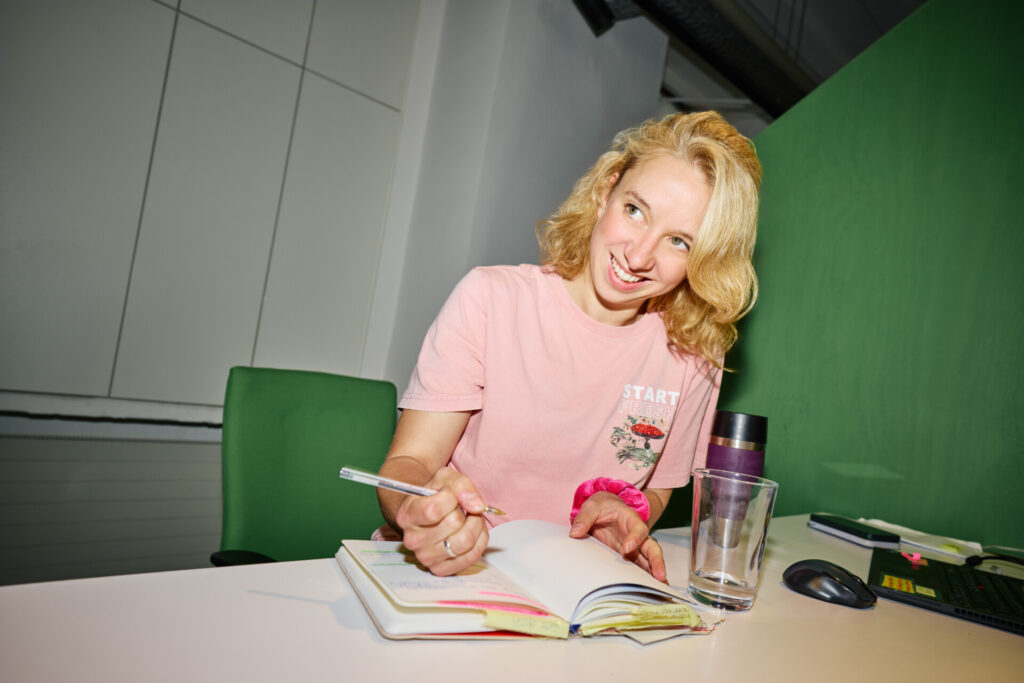
Das Leben ist da, um gelebt zu werden – ehrlich zu sein, sich selbst treu zu bleiben und sich nicht zu verbiegen, tun was einen erfüllt (auch wenn Arbeit dazugehört), und Spaß macht. Weniger Ego, mehr Echtheit und Empathie – das würde uns allen guttun.
Why is it important to have goals?
For me, goals are what turn movement into progress – and they’re what give decisions their meaning. They provide direction, create focus, and make visible what often gets lost in the noise of everyday life. That’s why you should never lose sight of them.
Goals motivate me. They remind me to take responsibility and help me direct my energy toward the places where it actually makes a difference.
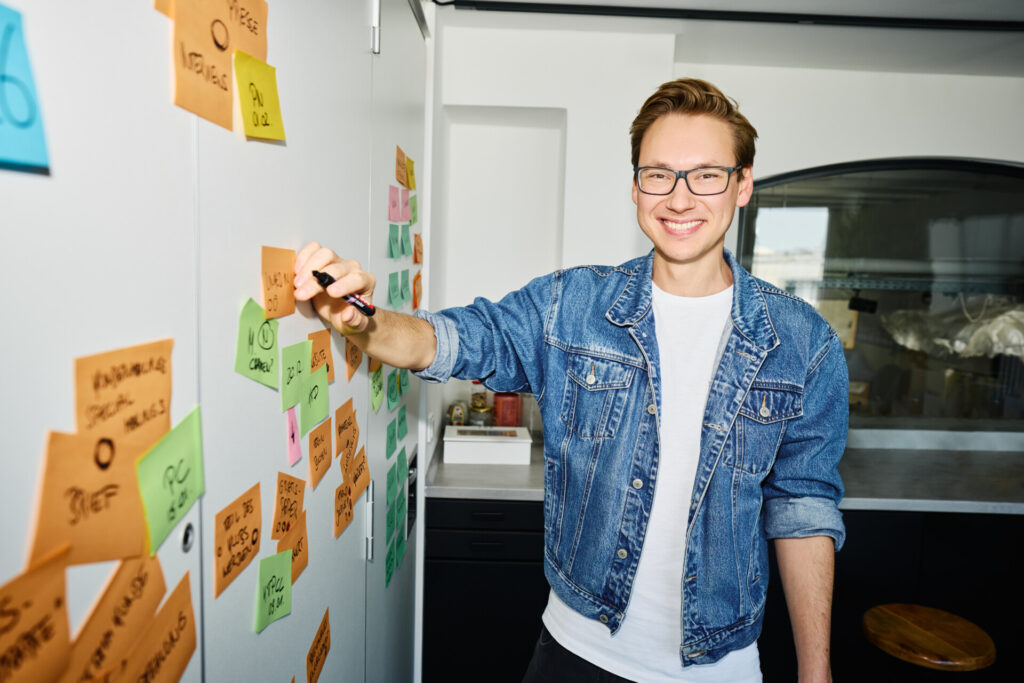
Das Leben ist da, um gelebt zu werden – ehrlich zu sein, sich selbst treu zu bleiben und sich nicht zu verbiegen, tun was einen erfüllt (auch wenn Arbeit dazugehört), und Spaß macht. Weniger Ego, mehr Echtheit und Empathie – das würde uns allen guttun.
How does a vision become reality?
By giving a vision space – but also structure. By listening, asking questions, and not letting go until an idea becomes a plan you can truly build on. That’s why I hold all the threads together, from the first scribble to the final spotlight.
For me, it’s not about perfect execution, but about authenticity and emotion.
About that one moment you remember – because courage, clarity, and story came together to create something new.
Something that stays.
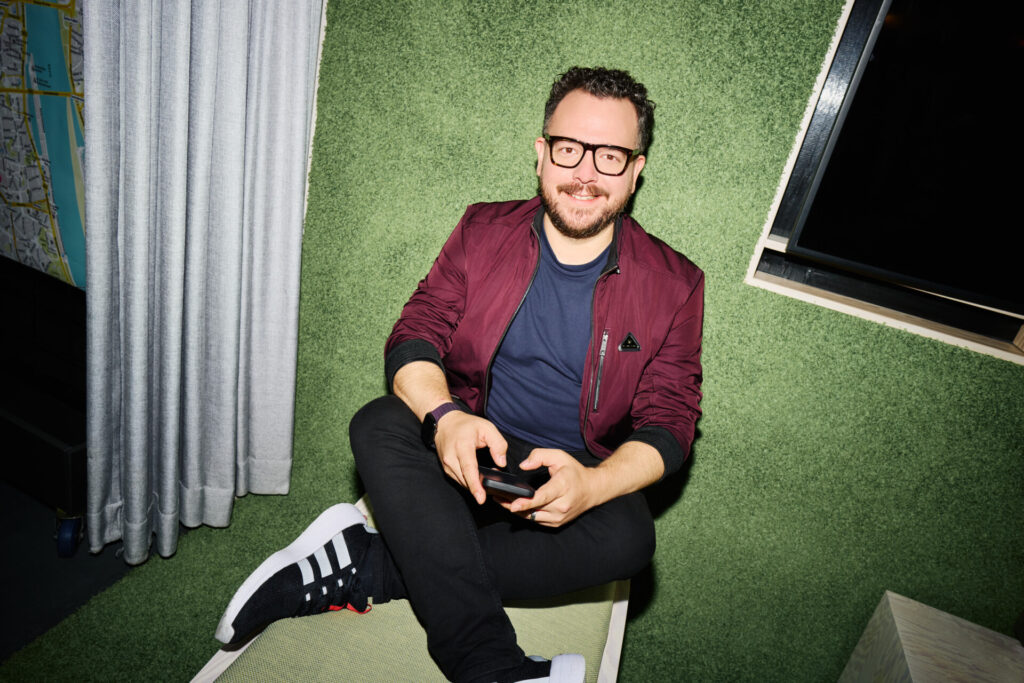
Das Leben ist da, um gelebt zu werden – ehrlich zu sein, sich selbst treu zu bleiben und sich nicht zu verbiegen, tun was einen erfüllt (auch wenn Arbeit dazugehört), und Spaß macht. Weniger Ego, mehr Echtheit und Empathie – das würde uns allen guttun.
What keeps you up at night?
Honestly, I’m less the overthinker and more the “think‑it‑forward” type. Sitting in a corner and brooding isn’t really my style – I’d rather stay curious and try something new.
But there is one question I still don’t have a satisfying answer to, even with all my empathy:
Why do so many people and organizations change their world so cautiously and so slowly, when it’s obvious that we need to accelerate together if we want to shape the future with courage?

Das Leben ist da, um gelebt zu werden – ehrlich zu sein, sich selbst treu zu bleiben und sich nicht zu verbiegen, tun was einen erfüllt (auch wenn Arbeit dazugehört), und Spaß macht. Weniger Ego, mehr Echtheit und Empathie – das würde uns allen guttun.
How do you manage to stay so positive?
People often tell me I radiate something positive. The truth is: I don’t have to work hard for it or “make it happen.” It just shows up.
I think it’s because I see challenges as opportunities to discover new paths. They create movement, new impulses, new perspectives.
Being positive, for me, means staying open, thinking ahead, and not getting stuck on what isn’t working. I look forward – because more often than not, the very next step takes me further than I expect.
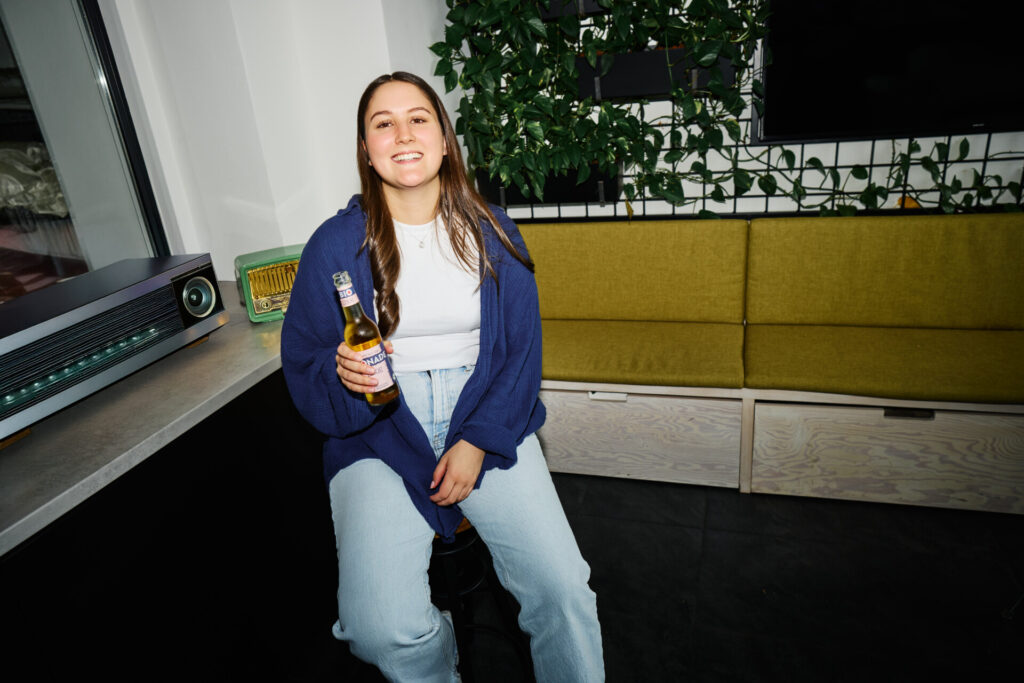
Das Leben ist da, um gelebt zu werden – ehrlich zu sein, sich selbst treu zu bleiben und sich nicht zu verbiegen, tun was einen erfüllt (auch wenn Arbeit dazugehört), und Spaß macht. Weniger Ego, mehr Echtheit und Empathie – das würde uns allen guttun.
What are you proud of?
I’m not really the kind of person who’s proud of myself easily. I tend to be proud of others – when someone follows through, grows, or shows something special as a person. Even when I achieve something great or master something tough, I still see room for improvement. But hey, I’m aware of that, and I’m working on it.
There is one thing I’m truly proud of, though: that I’ve gone my own way – despite all the well‑meant advice – all the way to Klubhaus. That makes me proud, because it has shaped who I am today.
We should all be proud of ourselves more often.
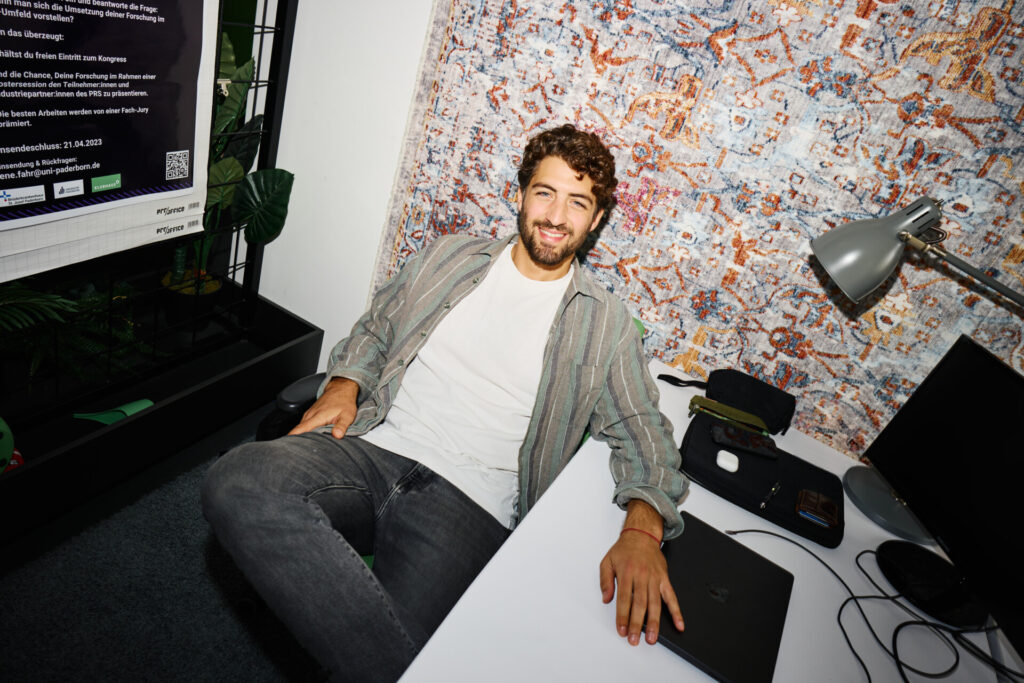
Das Leben ist da, um gelebt zu werden – ehrlich zu sein, sich selbst treu zu bleiben und sich nicht zu verbiegen, tun was einen erfüllt (auch wenn Arbeit dazugehört), und Spaß macht. Weniger Ego, mehr Echtheit und Empathie – das würde uns allen guttun.
Why do you do what you do?
I’m a project manager at Klubhaus because I love turning ideas into tangible experiences. No project is like the one before – and that challenges me, drives me, and motivates me to find solutions that move and inspire people.
The mix of structure, teamwork, and creativity pushes me to take responsibility – and at the same time make sure everything runs smoothly behind the scenes.
And then there’s that moment when everything comes together…

What do you need to be happy?
Routine, but not boredom.
Fresh air, but also big‑city life.
My favorite people around me – just not 24/7.
Balance.
What haven’t you achieved yet?
I’ve been able to shift the perception within the finance team that controlling and numbers are nothing more than exhausting, tedious obligations. And with AI, this transformation continues – bringing change, but also curiosity and new opportunities.
There’s always something to optimize, and that’s exactly what excites me about my job.
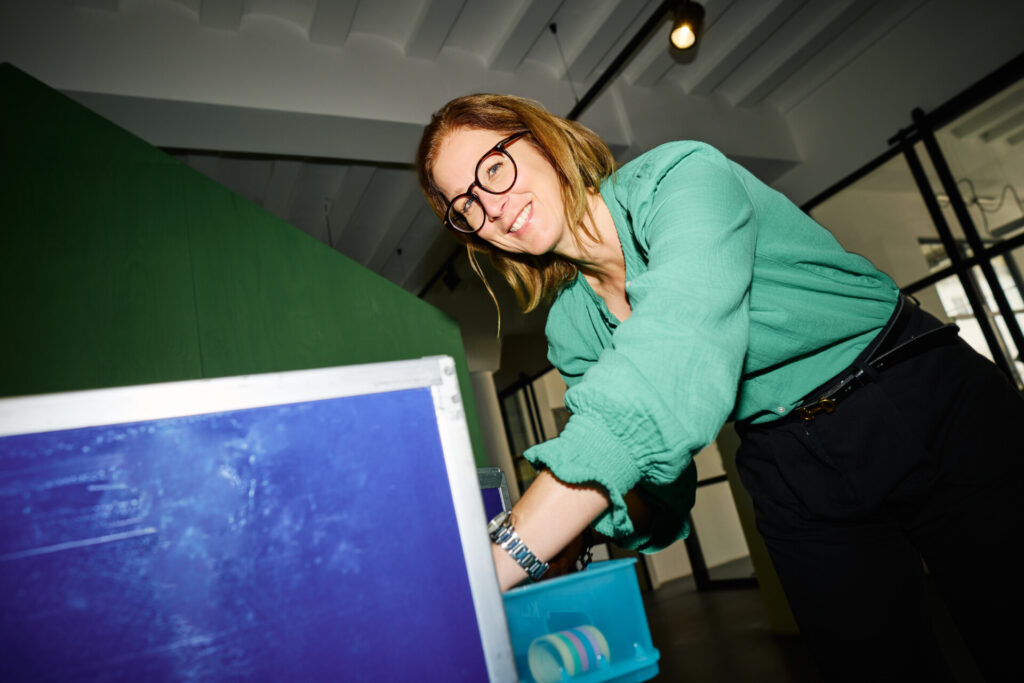
How do you stay true to yourself?
For me, staying true to myself means being honest with myself – even when it’s challenging or uncomfortable. It means making decisions that align with my values and convictions, even if that brings resistance.
Sometimes you have to be brave, especially when the easier path would be a different one.

How do you stay calm in challenging times?
Because meaning gives direction – and separates significance from bullshit. Companies and organizations need spaces where people can act without fear, because fear fundamentally blocks our ability to be effective.
At Klubhaus, we design spaces where vulnerability isn’t seen as a risk, but as a prerequisite for new ideas. Because the new only emerges in open conversation, in courageous contradiction, in honest thinking.
We need dialogue that stays democratic. Exchange that doesn’t confirm, but moves.
That’s why, even after 20 years, I still find it exciting to challenge expectations with our team and to create experiences that surprise instead of reproducing the familiar – that truly makes sense.
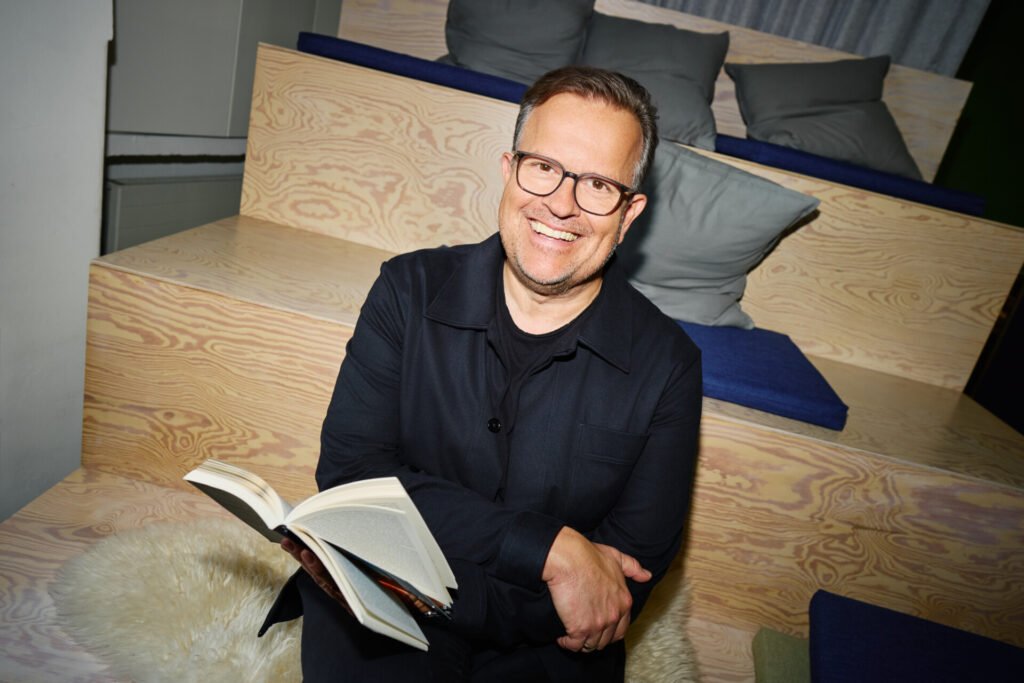
What is worth fighting for?
I fight for visions and goals we want to achieve together. Especially when others say, “That won’t work” or “That’s too complicated,” it motivates me even more to convince, to explain, and to bring everyone on board.
When we can proudly say in the end, “We moved something – with integrity, with purpose, together,” and look back on a project that not only worked but made an impact, it becomes clear every time:
It was worth fighting for.
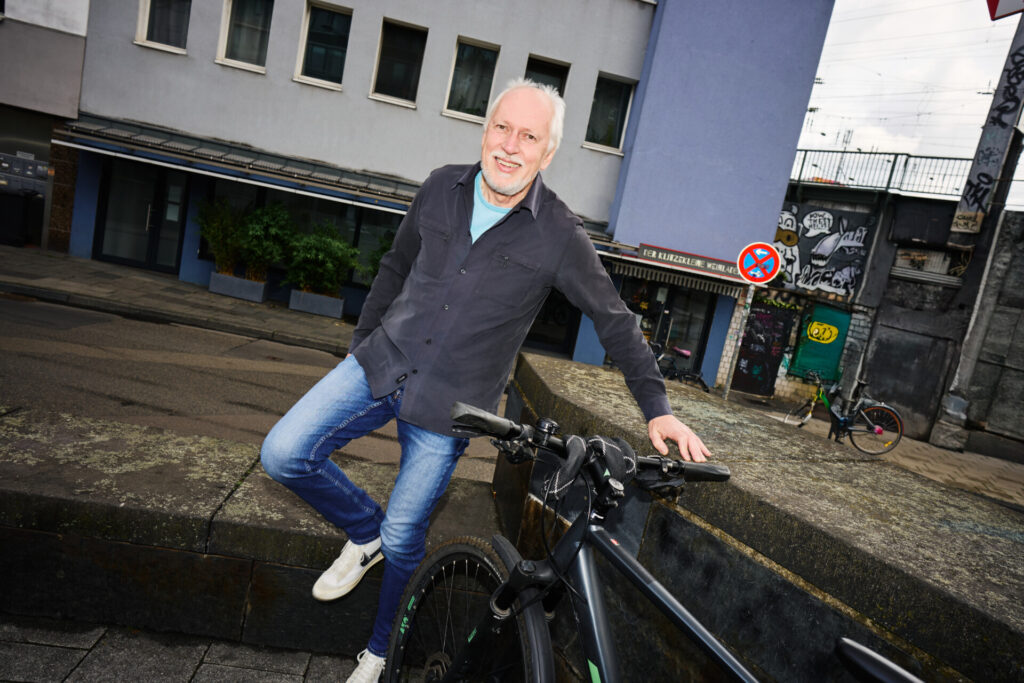
kunden













kontakt
Klubhaus GmbH
Ursulaplatz 1
50668 Köln
+49 221 35550910
info@klubhaus.de
Impressum:
Inhaltlich verantwortlich gemäß § 6 MDStV ist Dr. Torsten Fremer, Klubhaus – Agentur für intelligente Live-Kommunikation GmbH, Ursulaplatz 1, 50668 Köln
Geschäftsführer: Dr. Torsten Fremer // Handelsregistergericht: Amtsgericht Köln // Handelsregisternummer: HRB 63442 // Umsatzsteuer-Identifikationsnummer gemäß § 27 a // Umsatzsteuergesetz: Ust-IdNr. DE 814997615