






what
Klubhaus. Made to matter.
Klubhaus is an agency for intelligent live communication.
We create space and time to explore possible futures – and to transform the present.
For people who do not shy away from uncertainty, but see it as an invitation.
For people who do not wait for perfect answers, but bravely ask better questions.
Together. Human. Strategic.
Live communication can do a lot – and often very different things. But it only becomes truly powerful when it grabs you and doesn’t let go.
If you want to explore possible futures, you need more than a standard brief that’s simply been executed.
We start every project with a short workshop – a kind of time-travel exercise. Together, we jump mentally a few months ahead, into a moment where everything we dreamed of has worked. What feels different then? What are participants saying afterwards because they were genuinely moved or inspired? What has changed?
This is how relevant, future-ready concepts with real substance emerge – not as an end in themselves, but as a precise response to the actual goals of the process and the event.
Events and communication truly matter when they don’t just meet expectations. When they surprise us and feel different. When they captivate us and pull us right into the heart of the experience.
Dramaturgy? That’s exactly what it is: a deliberate flow that makes content tangible. It directs attention, sustains tension, and creates meaning. It gives us a sense of direction within the experience – and generates the very pull that draws us in.
At Klubhaus, we understand dramaturgy as an attitude, not a show. As the conscious staging of deliberate disruptions in rhythm, tension, and meaning – for each individual and for the group as a whole. It defines the framework for when, where, and how something happens.
The idea behind the concept becomes reality, and every thought and every design element interlock. Every moment contributes to the whole. Everything follows an inner logic – with a clear flow and room for the unexpected.
Dramaturgy fills space and time with energy.
Moments that bring people together are what matter when it comes to exploring futures together. That’s when an agenda can do more than just provide structure. It becomes a starting point for progress.
The art of shaping this progress, designing a meeting that invisibly carries people from A to Z—is what we mean by meeting design.
It creates space for productive collaboration. With methods that carry us forward without limiting us. With conversations that achieve more than mere agreement, unleash energy, and enable new ways of thinking.
Good meeting design thinks ahead: it creates formats with attitude.
Where many ideas come together, you need the big picture – and a clear goal in mind. Good project management brings structure to complex processes, creates clarity, and keeps everything moving.
Not with rigid plans, but in a dynamic way. With open communication, in an exchange as equals, working towards solutions that keep evolving.
For us, project management is like conducting an orchestra – balancing resources and emotions. The experience becomes the natural outcome of meticulous preparation.
For us, good project management means enabling rather than restricting. We listen, grasp the context, and engage with everyone involved – without ever losing sight of the participants’ perspective.
We craft ideas for specific occasions: some are designed for a single moment, others are meant to have a lasting impact.
They grow with the people, the questions, and the energy that emerges in collaborative work. Along the way, concepts that start out as one‑offs can evolve into formats that offer guidance, enable participation, and drive change.
The following formats have proven their value – in different variations and contexts, and with very diverse teams. Not as rigid constructs, but as living frameworks that create momentum and enable dialogue – grounded in reality, with a clear stance and depth.
What happens when we don’t explain change – but experience it? When we don’t avoid uncertainty, but consciously allow it?
Here, art becomes a catalyst: for disruption, for reflection, for movement. A quiet process that makes an impact – not loud, but deep.
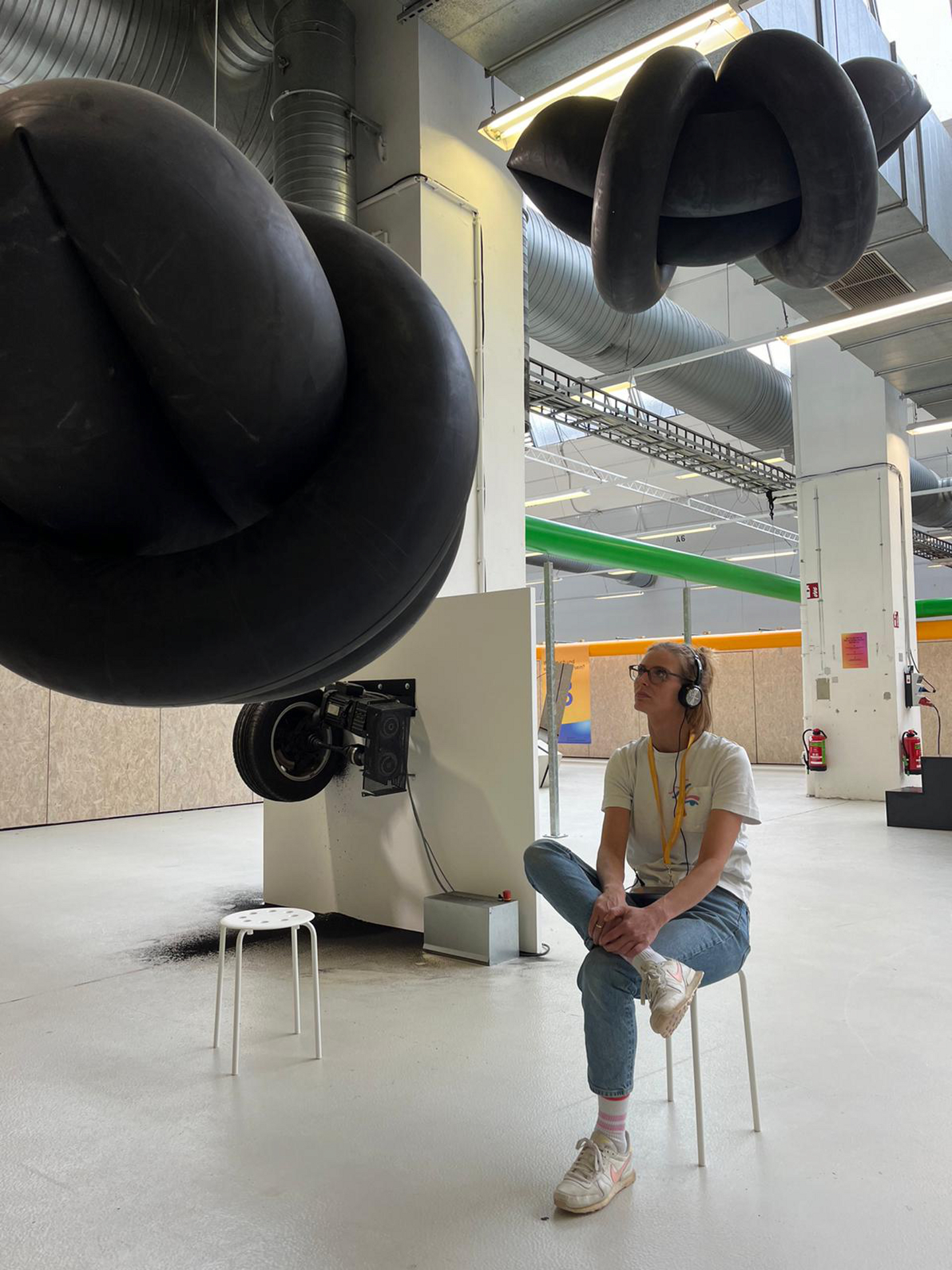
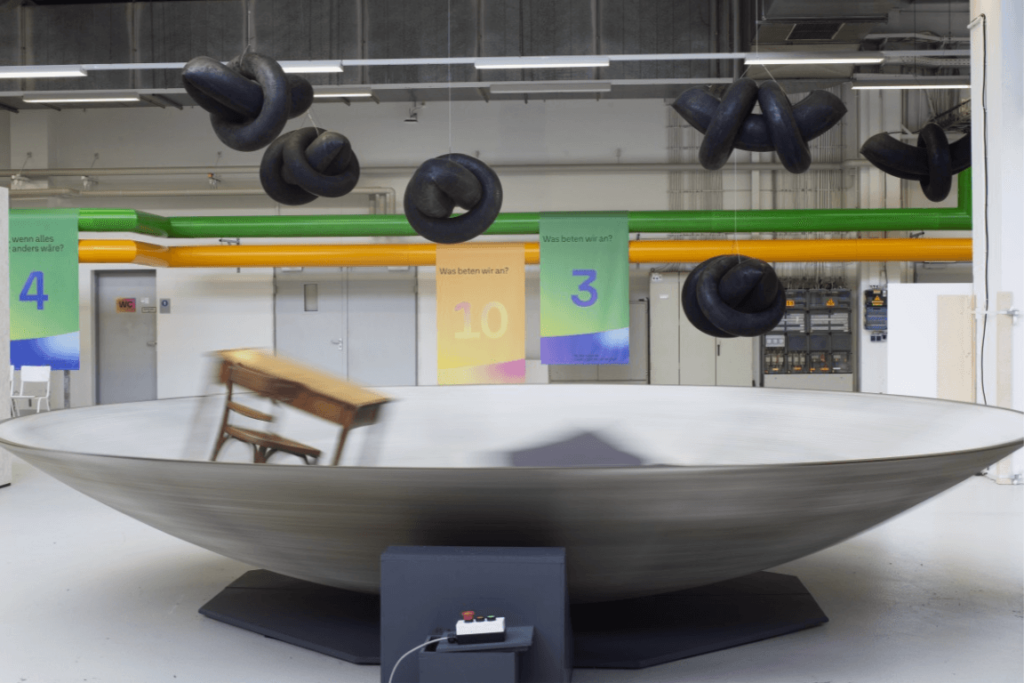
In close collaboration with artists, we translate the pressing questions of our time into a kind of “wake-up trail” that invites people to step onto new paths.
Through its installations, the Parcours for Change becomes a space of experience for leadership – beyond stage, slides, and bullet points. Instead of a concept, an impulse. Instead of certainty, a moment of pause. Instead of answers, there are questions:
- What does it feel like to revolve only around myself?
- How hard is it for me to embrace something new?
- What if everything were completely different?
- How much risk am I truly willing to take?
- …and more.
The format was initiated as part of Vorstellungskraft X, an initiative by Dr. Torsten Fremer (who founded Klubhaus in 2008) and, among others, Prof. Dr. Friedrich von Borries. It explores how we can lead through uncertainty and design with a clear stance.
Anyone who enters the Parcours leaves with nothing more – and nothing less – than a new perspective on themselves: change does not begin on the outside, but within.

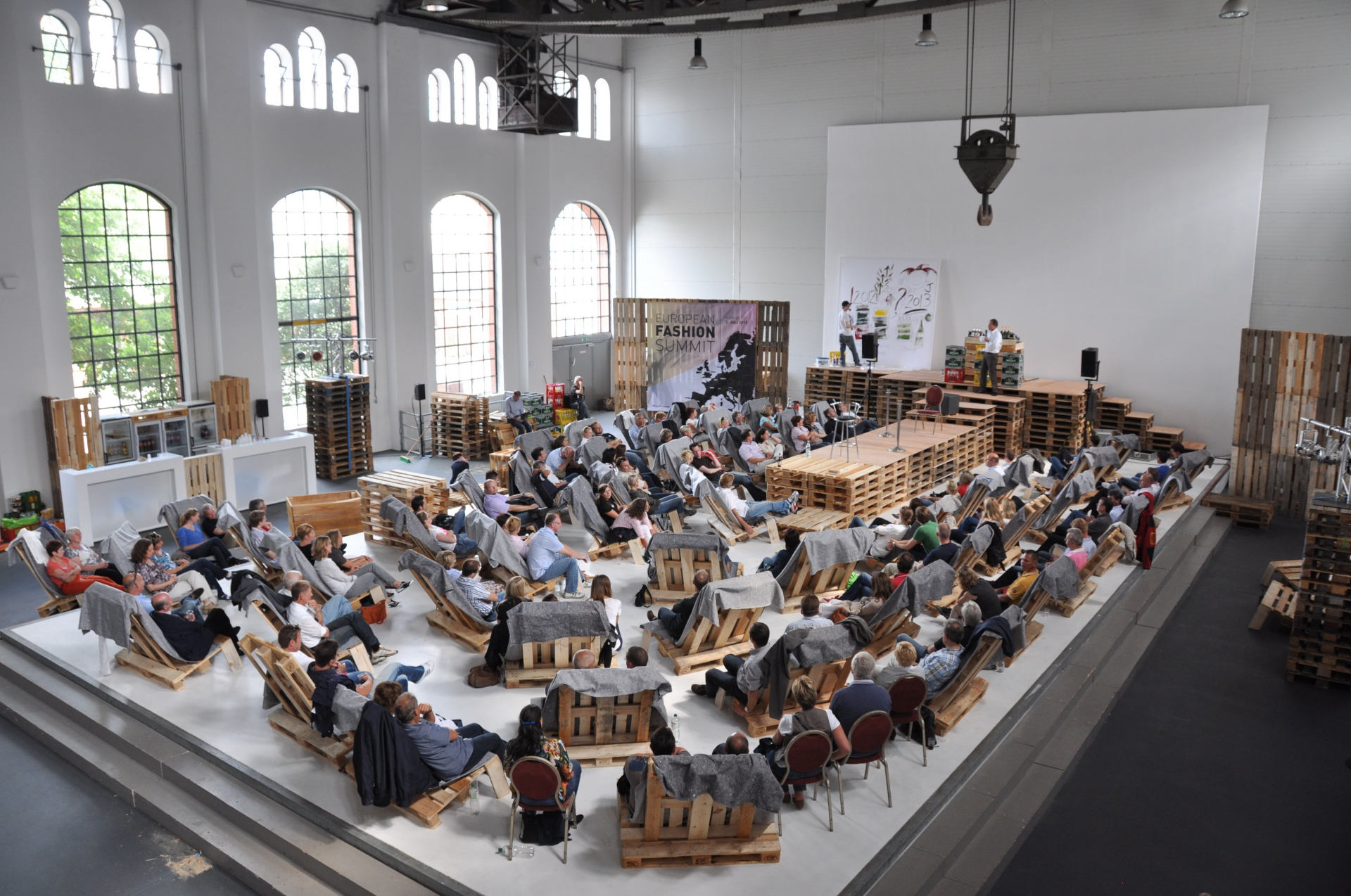
The Future Arena is not a format with a fixed script – it is a space for collective exploration.
Between the big stage and small‑group interaction, between impulses and exchange, movement begins to happen.
The Future Arena creates and uses a dynamic interplay: thinking together at the center, deepening discussions in smaller groups – continuously connected, reflected, and carried forward.
What matters is not a finished concept, but the shared process.
A place for questions that are otherwise too big, too uncomfortable, or too open.
A place for thoughts that need space before they can find direction.
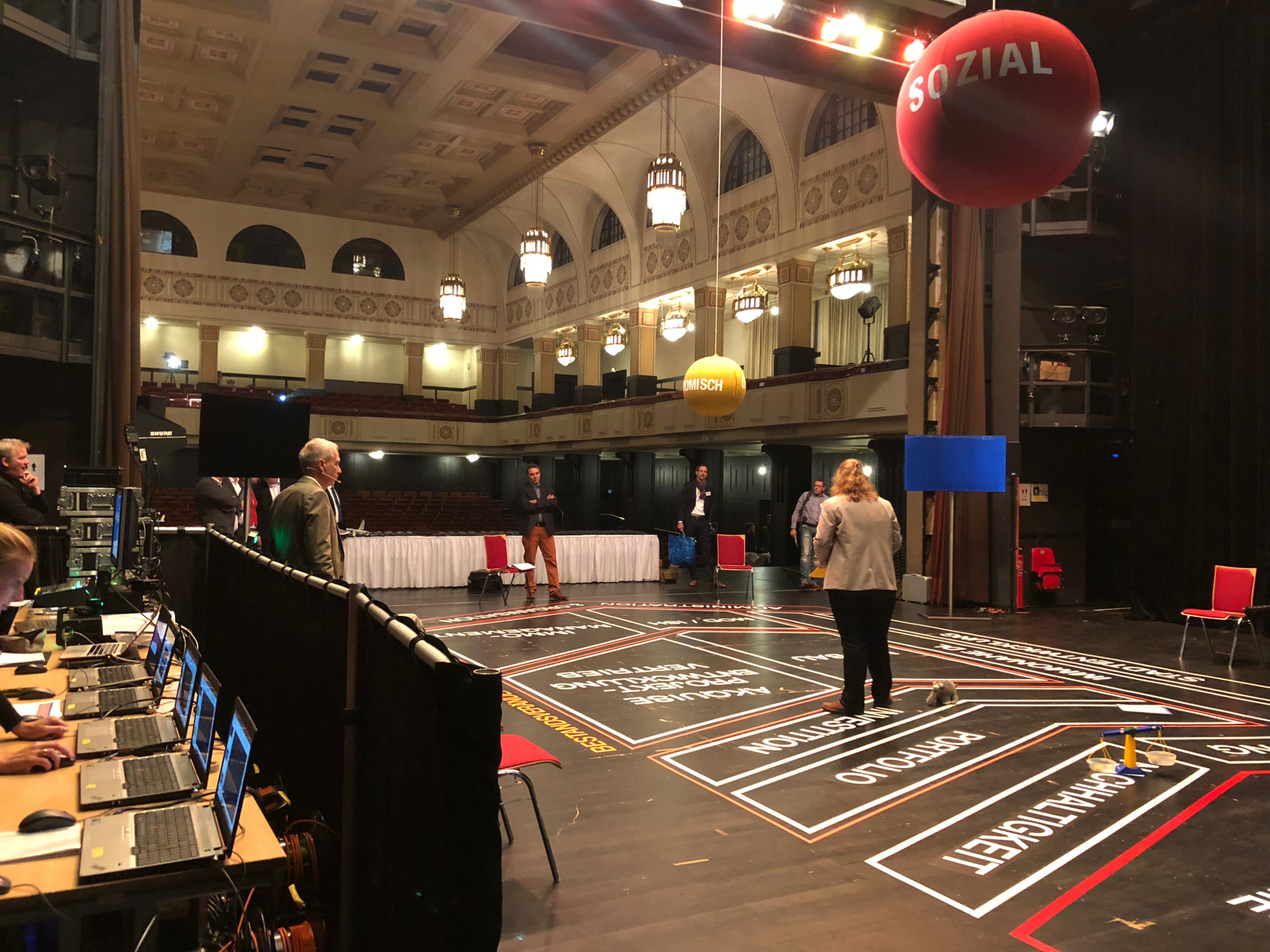
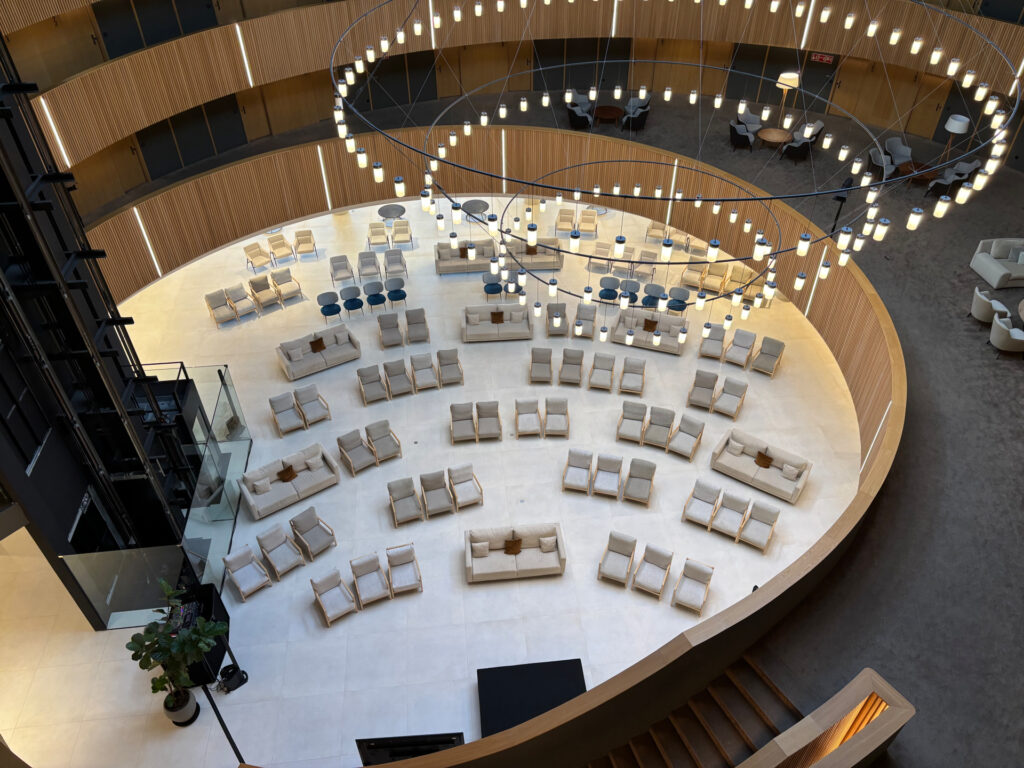
At the heart of the arena lies an open platform: a stage that can become anything – focal point, playground, resonance space. Around it: distributed tables as islands of interaction. People discussing, individually and yet connected through a shared platform that gathers and votes on ideas in real time. Participants are not part of the event – they are its protagonists: visible, approachable, impactful.
In the Future Arena, nothing is presented. Here, we ask, we feel, we focus. And what emerges goes beyond ideas for tomorrow – it creates relevance and courage for the future.
What if leadership began like winemaking – with foresight, patience, and the courage to make early decisions?
In the vineyard, nothing can be rushed. Those who plant vines think in years. Every decision reaches far beyond the moment. Winemakers live with this long‑term horizon – and shape change not in sprints, but in the rhythm of nature.
The Vineyard Experience makes exactly this tangible: leadership away from the daily rush, outdoors in space and wind. A shift in perspective that slows us down – and precisely through that, accelerates what truly matters.
No matter what topics we bring with us. While moving between cellar and hillside, new perspectives open up – adding valuable facets to how we think, act, and work together.
In the Vineyard Experience, it’s not about tools, but about attitude. Not about control, but clarity.
And sometimes, the answer isn’t found in the next workshop – but in a glass of Riesling.

Out of the office. Into real life.
Learning doesn’t happen between PowerPoint slides and coffee breaks – it happens out there, where life is pulsing. Our Learning Journey is an experiential format that gets people moving: mentally, emotionally, together.
Instead of theory, we create real encounters. Instead of front‑of‑the‑room teaching, we open up perspectives. We take teams on a journey to places, people, and stories that inspire and transform – wherever curiosity, change, and innovation can be felt.
The route? It depends on the topic. From artificial intelligence to new work, mindfulness, creativity, or “change as opportunity”: Klubhaus Learning Journeys draw on the philosophy of Otto Scharmer’s Theory U and his M.I.T. approach – taking detours to find new answers to urgent challenges. Because consciously stepping away from the obvious isn’t wasted time; it’s the core of transformation.
Klubhaus Learning Journeys create space for new ideas, real aha moments, and encounters that set things in motion – in people and in teams. And yes, they’re also a lot of fun.
Real questions. New impulses. Shared experience.
For learning that stays. What questions are you searching for new answers to?

Every organization has topics that clearly need to change – and yet, somehow, they don’t really move. Things get stuck, and frustration grows. The ideas are there, but the promised change never materializes. The bad news: this happens in almost every organization.
So what if there were a place where employees and leaders could come together to finally unlock movement in exactly these stuck areas? A space for new perspectives, honest exchange, and concrete next steps? The good news: that space exists.
The Klubhaus Change Factory is an innovative change lab – built for more action and fewer words.
With the Change Factory, we’ve created a format that, within a compact event, triggers exactly what real change needs:
- We build a shared understanding of why change is necessary.
- We create a foundation of trust that supports the shared journey into the future.
- And we close with concrete calls to action for transferring outcomes into everyday business.
In our Change Factory, everyone comes together: employees and leaders. Through a modular structure in four phases, we are able – even in a short time – to design a dramaturgy that leads to collective results.
The four phases of the Change Factory
Phase 1: Why change is so hard – and why that’s completely okay
…for a deeper understanding of why change often feels difficult – and why that is, in principle, absolutely legitimate.
Phase 2: Learning from the best – Masters of Change
…opens up new perspectives and impulses, showing that change can happen faster than we think – if we approach it the right way.
Phase 3: From “What if…?” to a concrete plan
…in real collaboration and a way of working together where everyone involved doesn’t just have a say, but actively co‑creates.
Phase 4: Transfer and Action Plan
…we define concrete steps that can be implemented immediately – and foster a culture of staying committed over time.
What the Change Factory does – and what it doesn’t
The Klubhaus Change Factory makes it possible, in a short time, to look at your organization’s transformation progress from a different angle.
Important: the Change Factory does not replace existing change management structures or transformation strategies. Instead, it lifts the perspective to a meta level that accelerates and sharpens what is already in place.
The Change Factory is a catalyst for transformation and a mindset shifter – from reacting to actively shaping.
What it takes for the Change Factory to succeed
- Leaders who are willing to listen to one another and are open to new ideas and encounters on equal terms.
- Courage to think differently – across boundaries, creatively, unconventionally – to actively initiate change.
- Employees who are eager to get involved and help actively shape the future of their organization.
We live and love collaboration. That’s why we actively partner with diverse people, projects, and organizations.
The initiatives that grow from this regularly spark the unexpected and the new – and constantly broaden our perspective.
Imagination is not a luxury. It is a tool, a mindset, and a muscle for change.
This is where Vorstellungskraft X comes in – an initiative by Dr. Torsten Fremer (from Klubhaus), together with Prof. Dr. Friedrich von Borries, Alexander Doudkin, and Ralph Linde.
At its core is a clear conviction: art can do more than inspire – it can shift thought patterns, break routines, and open up new spaces of possibility. In curated parcours, exhibitions, and workshops, artistic thinking meets strategic questions.
At Volkswagen, for example (Parcours for Change), more than 4,000 leaders have already moved through these spaces to renegotiate responsibility, change, and the future – not through PowerPoint, but through experience, friction, and reflection.
The initiative is accompanied by the Monopol podcast “Fantasiemuskel”, in which Friedrich von Borries and Torsten Fremer speak with experts from business, science, politics, and the arts about how imagination and fantasy can help us shape the future more effectively – and what role art can play in that.
Vorstellungskraft X is not an art project. It is an invitation to make transformation tangible – and to approach the future not just by planning it, but by relating to it differently: creatively, openly, and in a radically human way.

The Socratic Kitchen is not a workshop. It is a space for thinking. A conversation lab. A place where we are allowed to ask questions again – in ways that truly set something in motion.
It sits somewhere between philosophy, everyday logic, and surprisingly honest encounters. Sometimes while walking. Sometimes in the dark. Always with an open outcome.
This is where people meet who don’t need polished slides to start moving.
Thinking happens together. Conversations have substance. And what counts is not efficiency – but authenticity.
A space for everyone who doesn’t want to merely manage complexity, but truly understand it. And for teams who care more about meaning than about the next KPI.
The Socratic Kitchen was conceived by philosophers Manuel Scheidegger (Argumented Reality) and Torsten Fremer, managing director of Klubhaus – as an invitation to think differently again.
Not faster, but deeper. Not more efficient, but more relevant.

An alternative journey for your thinking
No show. No front-of-the-room program. Instead, a space where thinking begins differently – playful, honest, and surprisingly close.
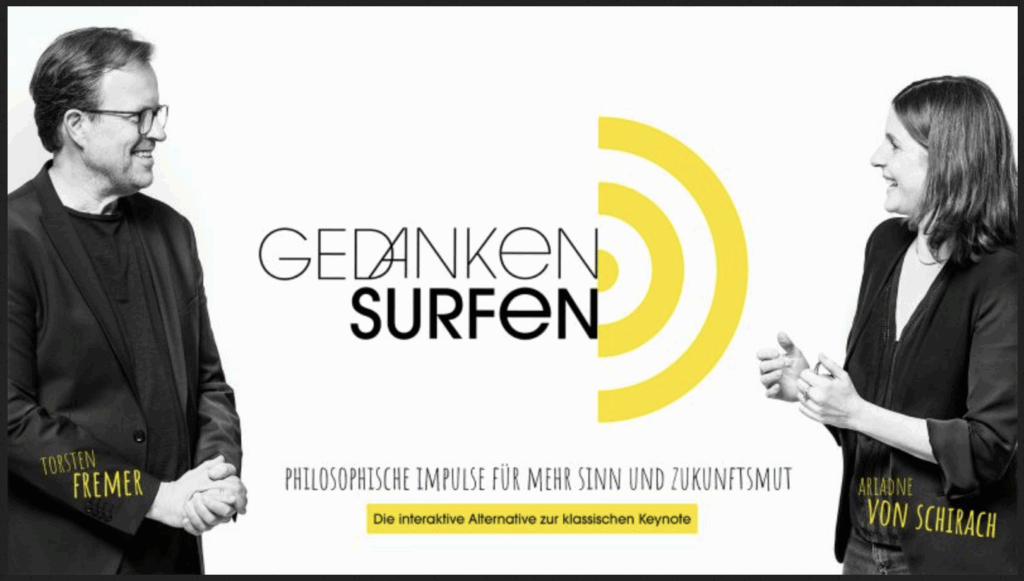
Between searching for meaning and questioning systems, between discomfort and hope, Gedankensurfen (“thought surfing”) invites us to navigate through questions together, instead of chasing quick answers.
Ariadne von Schirach and Torsten Fremer (Klubhaus) offer philosophical impulses – short, clear, and accessible. They open conversational spaces where everything has room that otherwise feels too big, too vague, or too personal.
Whether it’s about meaning or happiness, responsibility or appreciation – the topics are serious, the tone is light. No lecture, no hype. No workshop, no PowerPoint show – but an interactive format that enables thought surfing, where participants can voice and feel their irritations and hopes: you are not alone with your questions – and together, the future becomes braver.
Conversations that stay with you. Thoughts that keep working.
how
How we work
Our concepts emerge in exchange – with people, topics, and goals. Not off the shelf, but thought through for relevance. With a clear stance instead of a checklist. Based on the “Cologne Model” as a foundation for clarity, dialogue, and direction:
Meaning + Culture + Dramaturgy = Energy.
- When people understand the meaning of coming together – and that’s more than “we’re having a meeting.”
- When a culture of togetherness is built – and that’s more than “we’ll do a quick Q&A.”
- Only then can dramaturgy truly capture attention in a lasting way. And that’s when it emerges:
- …this unique energy of momentum and connection. Because real impact happens where people don’t just consume, but actively contribute.
Instead of “same agenda as always”, we create experiential spaces that stop the hamster wheel of frantic standstill. For companies for which “business as usual” is no longer an option. For organizations that don’t just want to think about change, but live it actively.
Make things, not slides.
who
So many different personalities, such diverse characters, such multifaceted life paths.
And that is precisely what defines us, has motivated us for so many years, and drives us forward every day. Sometimes it is challenging, but anything else would be boring and meaningless.
How do you make bold decisions?
I make bold decisions mostly when I fully stand behind an idea – for a project, for our team. And honestly, that happens quite often. Unfortunately, what’s sometimes missing is the courage around me to carry our bold ideas through as radically as they would deserve. And yes, that can be frustrating at times.
But I keep going, because I understand that stepping into the unknown is never easy.
But hey: only those who make bold decisions get rewarded with discovering something truly new.

Das Leben ist da, um gelebt zu werden – ehrlich zu sein, sich selbst treu zu bleiben und sich nicht zu verbiegen, tun was einen erfüllt (auch wenn Arbeit dazugehört), und Spaß macht. Weniger Ego, mehr Echtheit und Empathie – das würde uns allen guttun.
How do you bring out the best in yourself?
The best in us unfolds when we dare to dream – and have the courage to step onto new paths without losing sight of what truly matters. When we show up with passion, humor, and just the right amount of ambition.
Because sometimes dipping a cautious toe into the water isn’t enough.
Sometimes you have to jump – to grow beyond who you were before.

Das Leben ist da, um gelebt zu werden – ehrlich zu sein, sich selbst treu zu bleiben und sich nicht zu verbiegen, tun was einen erfüllt (auch wenn Arbeit dazugehört), und Spaß macht. Weniger Ego, mehr Echtheit und Empathie – das würde uns allen guttun.
What defines you?
It’s said that you become like the people you spend the most time with – no surprise, then, that I’ve absorbed the drive and diversity of our team: creative, individual, future‑minded, and fully in it with heart and intention.
Strengths grow over time.
What do I gladly add to the mix? My positivity, my genuine curiosity – and the joy of encounters that have the potential to become something more. Maybe even friendship.

Das Leben ist da, um gelebt zu werden – ehrlich zu sein, sich selbst treu zu bleiben und sich nicht zu verbiegen, tun was einen erfüllt (auch wenn Arbeit dazugehört), und Spaß macht. Weniger Ego, mehr Echtheit und Empathie – das würde uns allen guttun.
What’s life about?
Life is meant to be lived – to be honest, to stay true to yourself, and not to bend just to fit in. To do what fulfills you (yes, work included) and what brings joy.
Less ego, more authenticity and empathy – we could all use more of that.

Das Leben ist da, um gelebt zu werden – ehrlich zu sein, sich selbst treu zu bleiben und sich nicht zu verbiegen, tun was einen erfüllt (auch wenn Arbeit dazugehört), und Spaß macht. Weniger Ego, mehr Echtheit und Empathie – das würde uns allen guttun.
What do you need to grow?
For me, growth happens all the time – through experiences, new responsibilities, encounters with others, and by reflecting on my own actions. It’s important to me to stay open, stay curious, and allow myself to step into change.
At Klubhaus, we constantly meet new challenges – they push me, and they move me forward. Staying close to what’s happening in the world, without letting fixed mindsets slow me down – that’s how growth almost happens on its own.
Standing still? That would be far too boring.

Das Leben ist da, um gelebt zu werden – ehrlich zu sein, sich selbst treu zu bleiben und sich nicht zu verbiegen, tun was einen erfüllt (auch wenn Arbeit dazugehört), und Spaß macht. Weniger Ego, mehr Echtheit und Empathie – das würde uns allen guttun.
How do you know it’s time to change something?
When something feels off – when the vibes are no longer aligned – that’s when I know it’s time to make a change. My gut feeling is rarely wrong.
What exactly needs to change? That part isn’t always easy to figure out. But listening helps. Open communication helps. And an honest conversation with the people around you helps too.
Most of all: being honest with yourself.

Das Leben ist da, um gelebt zu werden – ehrlich zu sein, sich selbst treu zu bleiben und sich nicht zu verbiegen, tun was einen erfüllt (auch wenn Arbeit dazugehört), und Spaß macht. Weniger Ego, mehr Echtheit und Empathie – das würde uns allen guttun.
What do you need to stay optimistic?
For me, optimism means looking at things realistically – seeing them as they truly are. Not forcing positivity, but giving the “not‑so‑good” a place as well. A small one. Near the door. Where it can drift out again.
My optimism grows from the freedom to choose between the positive and the negative.
And to decide, consciously, where I want to put my attention.

Das Leben ist da, um gelebt zu werden – ehrlich zu sein, sich selbst treu zu bleiben und sich nicht zu verbiegen, tun was einen erfüllt (auch wenn Arbeit dazugehört), und Spaß macht. Weniger Ego, mehr Echtheit und Empathie – das würde uns allen guttun.
Why is it important to have goals?
For me, goals are what turn movement into progress – and they’re what give decisions their meaning. They provide direction, create focus, and make visible what often gets lost in the noise of everyday life. That’s why you should never lose sight of them.
Goals motivate me. They remind me to take responsibility and help me direct my energy toward the places where it actually makes a difference.

Das Leben ist da, um gelebt zu werden – ehrlich zu sein, sich selbst treu zu bleiben und sich nicht zu verbiegen, tun was einen erfüllt (auch wenn Arbeit dazugehört), und Spaß macht. Weniger Ego, mehr Echtheit und Empathie – das würde uns allen guttun.
How does a vision become reality?
By giving a vision space – but also structure. By listening, asking questions, and not letting go until an idea becomes a plan you can truly build on. That’s why I hold all the threads together, from the first scribble to the final spotlight.
For me, it’s not about perfect execution, but about authenticity and emotion.
About that one moment you remember – because courage, clarity, and story came together to create something new.
Something that stays.

Das Leben ist da, um gelebt zu werden – ehrlich zu sein, sich selbst treu zu bleiben und sich nicht zu verbiegen, tun was einen erfüllt (auch wenn Arbeit dazugehört), und Spaß macht. Weniger Ego, mehr Echtheit und Empathie – das würde uns allen guttun.
What keeps you up at night?
Honestly, I’m less the overthinker and more the “think‑it‑forward” type. Sitting in a corner and brooding isn’t really my style – I’d rather stay curious and try something new.
But there is one question I still don’t have a satisfying answer to, even with all my empathy:
Why do so many people and organizations change their world so cautiously and so slowly, when it’s obvious that we need to accelerate together if we want to shape the future with courage?

Das Leben ist da, um gelebt zu werden – ehrlich zu sein, sich selbst treu zu bleiben und sich nicht zu verbiegen, tun was einen erfüllt (auch wenn Arbeit dazugehört), und Spaß macht. Weniger Ego, mehr Echtheit und Empathie – das würde uns allen guttun.
What are you proud of?
I’m not really the kind of person who’s proud of myself easily. I tend to be proud of others – when someone follows through, grows, or shows something special as a person. Even when I achieve something great or master something tough, I still see room for improvement. But hey, I’m aware of that, and I’m working on it.
There is one thing I’m truly proud of, though: that I’ve gone my own way – despite all the well‑meant advice – all the way to Klubhaus. That makes me proud, because it has shaped who I am today.
We should all be proud of ourselves more often.

Das Leben ist da, um gelebt zu werden – ehrlich zu sein, sich selbst treu zu bleiben und sich nicht zu verbiegen, tun was einen erfüllt (auch wenn Arbeit dazugehört), und Spaß macht. Weniger Ego, mehr Echtheit und Empathie – das würde uns allen guttun.
Why do you do what you do?
I’m a project manager at Klubhaus because I love turning ideas into tangible experiences. No project is like the one before – and that challenges me, drives me, and motivates me to find solutions that move and inspire people.
The mix of structure, teamwork, and creativity pushes me to take responsibility – and at the same time make sure everything runs smoothly behind the scenes.
And then there’s that moment when everything comes together…

What do you need to be happy?
Routine, but not boredom.
Fresh air, but also big‑city life.
My favorite people around me – just not 24/7.
Balance.

What haven’t you achieved yet?
I’ve been able to shift the perception within the finance team that controlling and numbers are nothing more than exhausting, tedious obligations. And with AI, this transformation continues – bringing change, but also curiosity and new opportunities.
There’s always something to optimize, and that’s exactly what excites me about my job.

How do you stay true to yourself?
For me, staying true to myself means being honest with myself – even when it’s challenging or uncomfortable. It means making decisions that align with my values and convictions, even if that brings resistance.
Sometimes you have to be brave, especially when the easier path would be a different one.

How do you stay calm in challenging times?
Because meaning gives direction – and separates significance from bullshit. Companies and organizations need spaces where people can act without fear, because fear fundamentally blocks our ability to be effective.
At Klubhaus, we design spaces where vulnerability isn’t seen as a risk, but as a prerequisite for new ideas. Because the new only emerges in open conversation, in courageous contradiction, in honest thinking.
We need dialogue that stays democratic. Exchange that doesn’t confirm, but moves.
That’s why, even after 20 years, I still find it exciting to challenge expectations with our team and to create experiences that surprise instead of reproducing the familiar – that truly makes sense.
What is worth fighting for?
I fight for visions and goals we want to achieve together. Especially when others say, “That won’t work” or “That’s too complicated,” it motivates me even more to convince, to explain, and to bring everyone on board.
When we can proudly say in the end, “We moved something – with integrity, with purpose, together,” and look back on a project that not only worked but made an impact, it becomes clear every time:
It was worth fighting for.
clients



















contact
Klubhaus GmbH
Ursulaplatz 1
50668 Köln
+49 221 35550910
info@klubhaus.de
jobs
No open positions – but our doors are always open!
We don’t currently have any vacancies listed. But who says that has to be the end of the story?
If you feel like you belong here and are excited about creating live communication with real impact – then get in touch!
Send us your speculative application. No rigid format, no template-based application package. Instead, tell us who you are, what drives you, and why Klubhaus.
imprint
The person responsible for the content according to § 6 MDStV (State Treaty on Media Services) is Dr. Torsten Fremer, Klubhaus – Agentur für intelligente Live-Kommunikation GmbH, Ursulaplatz 1, 50668 Cologne, Germany.
Managing Director: Dr. Torsten Fremer // Commercial Register: Local Court of Cologne (Amtsgericht Köln) // Commercial Register Number: HRB 63442 // VAT Identification Number according to § 27 a of the German Value Added Tax Act: VAT ID No. DE 814997615
privacy
1. Definitions
The privacy policy of KLUBHAUS GmbH is based on the terms used by the European legislator for the adoption of the General Data Protection Regulation (GDPR)[cite: 1]. Our privacy policy should be legible and understandable for the public, as well as our customers and business partners[cite: 2]. To ensure this, we would like to explain the terminology used in advance [cite: 3].
We use the following terms in this privacy policy, among others:
a) personal data
Personal data are all information relating to an identified or identifiable natural person (hereinafter “data subject”)[cite: 3]. An identifiable natural person is one who can be identified, directly or indirectly, in particular by reference to an identifier such as a name, an identification number, location data, an online identifier or to one or more factors specific to the physical, physiological, genetic, mental, economic, cultural or social identity of that natural person [cite: 4].
b) data subject
A data subject is any identified or identifiable natural person whose personal data are processed by the controller responsible for the processing [cite: 4].
c) processing
Processing is any operation or set of operations performed on personal data, whether or not by automated means, such as collection [cite: 4], recording, organization, structuring, storage, adaptation or alteration, retrieval, consultation, use, disclosure by transmission, dissemination or otherwise making available, alignment or combination, restriction, erasure or destruction [cite: 5].
d) restriction of processing
Restriction of processing is the marking of stored personal data with the aim of limiting their processing in the future [cite: 5].
e) profiling
Profiling is any form of automated processing of personal data consisting of the use of personal data to evaluate certain personal aspects relating to a natural person, in particular to analyze or predict aspects concerning performance at work, economic situation, health [cite: 5], personal preferences, interests, reliability, behavior, location or movements [cite: 6].
f) pseudonymization
Pseudonymization is the processing of personal data in such a manner that the personal data can no longer be attributed to a specific data subject without the use of additional information, provided that such additional information is kept separately and is subject to technical and organizational measures to ensure that the personal data are not attributed to an identified or identifiable natural person [cite: 6].
g) controller or controller responsible for the processing
Controller or controller responsible for the processing is the natural or legal person, public authority, agency or other body which, alone or jointly with others [cite: 6], determines the purposes and means of the processing of personal data[cite: 7]. If the purposes and means of such processing are determined by Union or Member State law, the controller or the specific criteria for its nomination may be provided for by Union or Member State law [cite: 8].
h) processor
Processor is a natural or legal person, public authority, agency or other body which processes personal data on behalf of the controller [cite: 8].
i) recipient
Recipient is a natural or legal person, public authority, agency or another body, to which the personal data are disclosed, whether a third party or not[cite: 8]. However, public authorities which may receive personal data in the framework of a particular inquiry in accordance with Union or Member State law shall not be regarded as recipients [cite: 9].
j) third party
Third party is a natural or legal person, public authority, agency or body other than the data subject, controller, processor and persons who, under the direct authority of the controller or processor, are authorized to process personal data [cite: 9].
k) consent
Consent of the data subject is any freely given, specific, informed and unambiguous indication of the data subject’s wishes by which he or she, by a statement or by a clear affirmative action, signifies agreement [cite: 9] to the processing of personal data relating to him or her[cite: 10].
2. Name and address of the controller
The controller for the purposes of the General Data Protection Regulation (GDPR), other data protection laws applicable in Member States of the European Union and other provisions related to data protection is:
KLUBHAUS GmbH
Ursulaplatz 1
50668 Cologne
Germany
Tel.: +49 221 4686730
Email: info@KLUBHAUS.de
Website: www.klubhaus.de [cite: 11]
3. Name and address of the Data Protection Officer
The Data Protection Officer of the controller is:
G+R ITExperts GmbH
Mathias Gärtner
Heinheimer Str. 38
64289 Darmstadt
E-Mail: datenschutz@klubhaus.de
Any data subject may, at any time, contact our Data Protection Officer directly with all questions and suggestions concerning data protection[cite: 12].
4. Cookies
The internet pages of KLUBHAUS GmbH use cookies. Cookies are text files that are stored in a computer system via an internet browser [cite: 13].
Numerous internet sites and servers use cookies[cite: 13]. Many cookies contain a so-called cookie ID[cite: 14]. A cookie ID is a unique identifier of the cookie[cite: 14]. It consists of a character string through which internet pages and servers can be assigned to the specific internet browser in which the cookie was stored[cite: 15]. This allows visited internet sites and servers to differentiate the individual browser of the data subject from other internet browsers that contain other cookies[cite: 16]. A specific internet browser can be recognized and identified using the unique cookie ID [cite: 17].
Through the use of cookies, KLUBHAUS GmbH can provide the users of this website with more user-friendly services that would not be possible without the cookie setting [cite: 17].
By means of a cookie, the information and offers on our website can be optimized with the user in mind[cite: 17]. Cookies allow us, as previously mentioned, to recognize our website users[cite: 18]. The purpose of this recognition is to make it easier for users to utilize our website[cite: 19]. The website user that uses cookies, e.g. does not have to enter access data each time the website is accessed, because this is taken over by the website, and the cookie is stored on the user’s computer system[cite: 20]. Another example is the cookie of a shopping cart in an online shop[cite: 21]. The online shop remembers the articles that a customer has placed in the virtual shopping cart via a cookie [cite: 22].
The data subject may, at any time, prevent the setting of cookies through our website by means of a corresponding setting of the internet browser used, and may thus permanently deny the setting of cookies[cite: 22]. Furthermore, already set cookies may be deleted at any time via an internet browser or other software programs[cite: 23]. This is possible in all popular internet browsers[cite: 24]. If the data subject deactivates the setting of cookies in the internet browser used, not all functions of our website may be entirely usable[cite: 24].
5. Collection of general data and information
The website of KLUBHAUS GmbH collects a series of general data and information when a data subject or automated system calls up the website[cite: 25]. This general data and information are stored in the server log files[cite: 26]. Collected may be (1) the browser types and versions used, (2) the operating system used by the accessing system, (3) the website from which an accessing system reaches our website (so-called referrers), (4) the sub-websites, (5) the date and time of access to the internet site, (6) an internet protocol address (IP address), (7) the internet service provider of the accessing system, and (8) any other similar data and information that may be used in the event of attacks on our information technology systems [cite: 27].
When using these general data and information, KLUBHAUS GmbH does not draw any conclusions about the data subject[cite: 27]. Rather, this information is needed to (1) deliver the content of our website correctly, (2) optimize the content of our website as well as its advertisement, (3) ensure the long-term viability of our information technology systems and website technology, and (4) provide law enforcement authorities with the information necessary for criminal prosecution in case of a cyber-attack[cite: 28]. Therefore, KLUBHAUS GmbH analyzes anonymously collected data and information statistically, with the aim of increasing the data protection and data security of our enterprise, and to ensure an optimal level of protection for the personal data we process[cite: 29]. The anonymous data of the server log files are stored separately from all personal data provided by a data subject[cite: 30].
6. Subscription to comments in the blog on the website
The comments made in the blog of KLUBHAUS GmbH may be subscribed to by third parties[cite: 31]. In particular, there is the possibility that a commentator subscribes to the comments following his comments on a particular blog post [cite: 32].
If a data subject decides to subscribe to the option, the controller will send an automatic confirmation email to check the double-opt-in procedure as to whether the owner of the specified email address decided for this option[cite: 32]. The option to subscribe to comments may be terminated at any time[cite: 33].
7. Routine erasure and blocking of personal data
The controller shall process and store the personal data of the data subject only for the period necessary to achieve the purpose of storage, or as far as this is granted by the European legislator or other legislators in laws or regulations to which the controller is subject [cite: 34].
If the storage purpose is not applicable, or if a storage period prescribed by the European legislator or another competent legislator expires, the personal data are routinely blocked or erased in accordance with legal requirements[cite: 34].
8. Rights of the data subject
a) Right of confirmation
Each data subject shall have the right granted by the European legislator to obtain from the controller the confirmation as to whether or not personal data concerning him or her are being processed[cite: 35]. If a data subject wishes to avail himself of this right of confirmation, he or she may, at any time, contact any employee of the controller [cite: 36].
b) Right of access
Each data subject shall have the right granted by the European legislator to obtain from the controller free information about his or her personal data stored at any time and a copy of this information[cite: 36]. Furthermore, the European directives and regulations grant the data subject access to the following information [cite: 37]:
the purposes of the processing
the categories of personal data concerned
the recipients or categories of recipients to whom the personal data have been or will be disclosed, in particular recipients in third countries or international organizations
where possible, the envisaged period for which the personal data will be stored, or, if not possible, the criteria used to determine that period
the existence of the right to request from the controller rectification or erasure of personal data, or restriction of processing of personal data concerning the data subject, or to object to such processing
the existence of the [cite: 37] right to lodge a complaint with a supervisory authority [cite: 38]
where the personal data are not collected from the data subject, any available information as to their source
the existence of automated decision-making, including profiling, referred to in Article 22(1) and (4) of the GDPR and, at least in those cases, meaningful information about the logic involved, as well as the significance and envisaged consequences of such processing for the data subject
Furthermore, the data subject shall have a right to obtain information as to whether personal data are transferred to a third country or to an international organization[cite: 38]. Where this is the case, the data subject shall have the right to be informed of the appropriate safeguards relating to the transfer [cite: 39].
If a data subject wishes to avail himself of this right of access, he or she may, at any time, contact any employee of the controller [cite: 39].
c) Right to rectification
Each data subject shall have the right granted by the European legislator to obtain from the controller without undue delay the rectification of inaccurate personal data concerning him or her[cite: 39]. Taking into account the purposes of the processing, the data subject shall have the right to have incomplete personal data completed, including by means of providing a supplementary statement [cite: 40].
If a data subject wishes to avail himself of this right to rectification, he or she may, at any time, contact any employee of the controller [cite: 40].
Each data subject shall have the right granted by the European legislator to obtain from the controller the erasure of personal data concerning him or her without undue delay, and the controller shall have the obligation to erase personal data without undue delay where one of the following grounds applies, as long as the processing is not necessary [cite: 40]:
The personal data are no longer necessary in relation to the purposes for which they were collected [cite: 40] or otherwise processed [cite: 41].
The data subject withdraws consent on which the processing is based according to point (a) of Art. [cite: 41] 6(1) of the GDPR, or point (a) of Art. 9 [cite: 42] (2) of the GDPR, and where there is no other legal ground for the processing [cite: 43].
The data subject objects to the processing pursuant to Art. [cite: 43] 21(1) of the GDPR and there are no overriding legitimate grounds for the processing, or the data subject objects to the processing pursuant to Art. [cite: 44] 21(2) of the GDPR [cite: 45].
The personal data have been unlawfully processed [cite: 45].
The personal data must be erased for compliance with a legal obligation in Union or Member State law to which the controller is subject [cite: 45].
The personal data have been collected in relation to the offer of information society services referred to in Art. [cite: 45] 8(1) of the GDPR [cite: 46].
If one of the aforementioned reasons applies, and a data subject wishes to request the erasure of personal data stored by KLUBHAUS GmbH, he or she may, at any time, contact any employee of the controller[cite: 46]. An employee of KLUBHAUS GmbH shall promptly ensure that the erasure request is complied with immediately [cite: 47].
Where the controller has made personal data public and is obliged pursuant to Art. [cite: 47] 17(1) to erase the personal data, the controller, taking account of available technology and the cost of implementation, shall take reasonable steps, including technical measures, to inform other controllers processing the personal data that the data subject has requested erasure by such controllers of any links to, or copy or replication of, those personal data, as far as processing is not required[cite: 48]. An employee of KLUBHAUS GmbH will arrange the necessary measures in individual cases [cite: 49].
e) Right of restriction of processing
Each data subject shall have the right granted by the European legislator to obtain from the controller restriction of processing where one of the following applies [cite: 49]:
The accuracy of the personal data is contested by the data subject, for a period enabling the controller to verify the accuracy of the personal data [cite: 49].
The processing is unlawful and the data subject opposes the erasure of the personal data and requests instead the restriction of their use instead [cite: 49].
The controller no longer [cite: 49] needs the personal data for the purposes of the processing, but they are required by the data subject for the establishment, exercise or defense of legal claims [cite: 50].
The data subject has objected to processing pursuant to [cite: 50] Art. 21(1) of the GDPR pending the verification whether the legitimate grounds of the controller override those of the data subject [cite: 51].
If one of the aforementioned conditions is met, and a data subject wishes to request the restriction of the processing of personal data stored by KLUBHAUS GmbH, he or she may at any time contact any employee of the controller[cite: 51]. The employee of KLUBHAUS GmbH will arrange the restriction of the processing [cite: 52].
f) Right to data portability
Each data subject shall have the right granted by the European legislator, to receive the personal data concerning him or her, which was provided to a controller, in a structured, commonly used and machine-readable format[cite: 52]. He or she shall have the right to transmit those data to another controller without hindrance from the controller to which the personal data have been provided, as long as the processing is based on consent pursuant to point (a) of Art. [cite: 53] 6(1) of the GDPR or point (a) of Art. 9(2) of the GDPR, or on a contract pursuant to point (b) of Art. [cite: 54] 6(1) of the GDPR, and the processing is carried out by automated means, as long as the processing is not necessary for the performance of a task carried out in the public interest or in the exercise of official authority vested in the controller [cite: 55].
Furthermore, in exercising his or her right to data portability pursuant to Art. [cite: 55] 20(1) of the GDPR, the data subject shall have the right to have personal data transmitted directly from one controller to another, where technically feasible and when doing so does not adversely affect the rights and freedoms of others [cite: 56].
In order to assert the right to data portability, the data subject may at any time contact any employee of KLUBHAUS GmbH [cite: 56].
g) Right to object
Each data subject shall have the right granted by the European legislator to object, on grounds relating to his or her particular situation, at any time, to processing of personal data concerning him or her, which is based on point (e) or (f) of Art. [cite: 56] 6(1) of the GDPR[cite: 57]. This also applies to profiling based on these provisions [cite: 58].
KLUBHAUS GmbH shall no longer process the personal data in the event of the objection, unless we can demonstrate compelling legitimate grounds for the processing which override the interests, rights and freedoms of the data subject, or for the establishment, exercise or defense of legal claims [cite: 58].
If KLUBHAUS GmbH processes personal data for direct marketing purposes, the data subject shall have the right to object at any time to processing of personal data concerning him or her for such marketing[cite: 58]. This applies to profiling to the extent that it is related to such direct marketing[cite: 59]. If the data subject objects to KLUBHAUS GmbH to the processing for direct marketing purposes, KLUBHAUS GmbH will no longer process the personal data for these purposes [cite: 60].
In addition, the data subject has the right, on grounds relating to his or her particular situation, to object to processing of personal data concerning him or her by KLUBHAUS GmbH for scientific or historical research purposes, or for statistical purposes pursuant to Art. [cite: 60] 89(1) of the GDPR, unless the processing is necessary for the performance of a task carried out for reasons of public interest [cite: 61].
In order to exercise the right to object, the data subject may contact any employee of KLUBHAUS GmbH or another employee[cite: 61]. In addition, the data subject is free in the context of the use of information society services, and notwithstanding Directive 2002/58/EC, to use his or her right to object by automated means using technical specifications [cite: 62].
h) Automated individual decision-making, including profiling
Each data subject shall have the right granted by the European legislator not to be subject to a decision based solely on automated processing, including profiling, which produces legal effects concerning him or her, or similarly significantly affects him or her, as long as the decision (1) is not is necessary for entering into, or the performance of, a contract between the data subject [cite: 62] and a data controller, or (2) is authorized by Union or Member State law to which the controller is subject and which also lays down suitable measures to safeguard the data subject’s rights and freedoms and legitimate interests, or (3) is based on the data subject’s explicit consent [cite: 63].
If the decision (1) is necessary for entering into, or the performance of, a contract between the data subject and a data controller, or (2) it is based on the data subject’s explicit consent, KLUBHAUS GmbH shall implement suitable measures to safeguard the data subject’s rights and freedoms and legitimate interests, at least [cite: 63] the right to obtain human intervention on the part of the controller, to express his or her point of view and contest the decision [cite: 64].
If the data subject wishes to exercise the rights concerning automated individual decision-making, he or she may, at any time, contact any employee of the controller [cite: 64].
i) Right to withdraw data protection consent
Each data subject shall have the right granted by the European legislator to withdraw his or her consent to processing of his or her personal data at any time [cite: 64].
If the data subject wishes to exercise the right to withdraw the consent, he or she may, at any time, contact any [cite: 64] employee of the controller[cite: 65].
9. Data protection for applications and the application procedures
The data controller shall collect and process the personal data of applicants for the purpose of the processing of the application procedure[cite: 65]. The processing may also be carried out electronically[cite: 66]. This is the case, in particular, if an applicant submits corresponding application documents by e-mail or by means of a web form on the website to the controller[cite: 66]. If the data controller concludes an employment contract with an applicant, the submitted data will be stored for the purpose of processing the employment relationship in compliance with legal requirements[cite: 67]. If no employment contract is concluded with the applicant by the controller, the application documents shall be automatically erased two months after notification of the refusal decision, provided that no other legitimate interests of the controller oppose the erasure[cite: 68]. Other legitimate interest in this relation is, e.g. a burden of proof in a procedure under the General Equal Treatment Act (AGG)[cite: 69].
10. Data protection provisions about the application and use of Google Analytics (with anonymization function)
On this website, the controller has integrated the component of Google Analytics (with the anonymizer function)[cite: 70]. Google Analytics is a web analytics service[cite: 71]. Web analytics is the collection, gathering, and analysis of data about the behavior of visitors to websites[cite: 71]. A web analysis service collects, inter alia, data about the website from which a person has come (the so-called referrer), which sub-pages were visited, or how often and for what duration a sub-page was viewed[cite: 72]. Web analytics are mainly used for the optimization of a website and in order to carry out a cost-benefit analysis of internet advertising [cite: 73].
The operator of the Google Analytics component is Google Inc., 1600 Amphitheatre Pkwy, Mountain View, CA 94043-1351, USA [cite: 73].
For the web analytics through Google Analytics the controller uses the application “_gat._anonymizeIp”[cite: 73]. By means of this application, the IP address of the internet connection of the data subject is abridged by Google and anonymized when accessing our websites from a Member State of the European Union or another Contracting State to the Agreement on the European Economic Area [cite: 74].
The purpose of the Google Analytics component is to analyze the traffic on our website[cite: 74]. Google uses the collected data and information, inter alia, to evaluate the use of our website and to provide online reports, which show the activities on our websites, and to provide other services concerning the use of our internet site for us [cite: 75].
Google Analytics places a cookie on the information technology system of the data subject[cite: 75]. The definition of cookies is explained above[cite: 76]. With the setting of the cookie, Google is enabled to analyze the use of our website[cite: 76]. With each call-up to one of the individual pages of this internet site, which is operated by the controller and into which a Google Analytics component was integrated, the internet browser on the information technology system of the data subject will automatically submit data through the Google Analytics component for the purpose of online advertising and the settlement of commissions to Google[cite: 77]. During the course of this technical procedure, the enterprise Google gains knowledge of personal information, such as the IP address of the data subject, which serves Google, inter alia, to understand the origin of visitors and clicks, and subsequently create commission settlements [cite: 78].
The cookie is used to store personal information, such as the access time, the location from which the access was made, and the frequency of visits of our website by the data subject[cite: 78]. With each visit to our internet site, such personal data, including the IP address of the internet access used by the data subject, will be transmitted to Google in the United States of America[cite: 79]. These personal data are stored by Google in the United States of America[cite: 80]. Google may pass these personal data collected through the technical procedure to third parties [cite: 81].
The data subject may, as stated above, prevent the setting of cookies through our website at any time by means of a corresponding setting of the web browser used and thus permanently deny the setting of cookies[cite: 81]. Such a setting on the internet browser used would also prevent Google Analytics from setting a cookie on the information technology system of the data subject[cite: 82]. In addition, cookies already in use by Google Analytics may be deleted at any time via a web browser or other software programs [cite: 83].
In addition, the data subject has the possibility of objecting to a collection of data that are generated by Google Analytics, which is related to the use of this website, as well as the processing of this data by Google and the chance to preclude any such[cite: 83]. For this purpose, the data subject must download a browser add-on under the link https://tools.google.com/dlpage/gaoptout and install it[cite: 84]. This browser add-on tells Google Analytics through a JavaScript, that any data and information about the visits of internet pages may not be transmitted to Google Analytics[cite: 85]. The installation of the browser add-ons is considered an objection by Google[cite: 86]. If the information technology system of the data subject is later deleted, formatted, or newly installed, then the data subject must reinstall the browser add-ons to disable Google Analytics[cite: 87]. If the browser add-on was uninstalled by the data subject or any other person who is attributable to their sphere of competence, or is disabled, it is possible to execute the reinstallation or reactivation of the browser add-ons [cite: 88].
Further information and the applicable data protection provisions of Google may be retrieved under https://www.google.de/intl/de/policies/privacy/ and under http://www.google.com/analytics/terms/de.html[cite: 88]. Google Analytics is further explained under the following Link https://www.google.com/intl/de_de/analytics/[cite: 89].
11. Web analysis service Matomo (formerly Piwik)
Our website uses Matomo (formerly PIWIK), an open-source software for the statistical analysis of user access[cite: 89]. Matomo uses cookies, which are stored on your computer and enable an anonymized analysis of your use of the website (for cookies see above)[cite: 90]. An identification of a specific person is not possible, as your IP address is anonymized immediately after processing and before storage[cite: 91]. When individual pages of our website are accessed, the following data are stored: (1) Two bytes of the IP address of the calling system of the user (2) The accessed website (3) The website from which the user reached the accessed website (referrer) (4) The sub-pages that are accessed from the accessed website (5) The length of stay on the website (6) The frequency of access to the website [cite: 92].
The software runs exclusively on the servers of our website[cite: 92]. The personal data of users is stored only there. No data is passed on to third parties[cite: 93]. The legal basis for processing personal data of users using cookies is Art. 6 Para. 1 lit. [cite: 94] f GDPR. By anonymizing the IP address, the user’s interest in the protection of their personal data is sufficiently taken into account [cite: 95].
The processing of the user’s personal data enables us to analyze the surfing behavior of our users[cite: 95]. By evaluating the data obtained, we are able to compile information about the use of individual components of our website[cite: 96]. This helps us to constantly improve our website and its user-friendliness [cite: 97].
Cookies are stored on the user’s computer and transmitted by it to our site[cite: 97]. Therefore, you as a user also have full control over the use of cookies[cite: 98]. By changing the settings in your internet browser, you can deactivate or restrict the transmission of cookies[cite: 99]. Already stored cookies can be deleted at any time. This can also be done automatically[cite: 100]. If cookies for our website are deactivated, it may no longer be possible to use all functions of the website to their full extent[cite: 101]. Further information on the privacy settings of the Matomo software can be found at the following link: https://matomo.org/docs/privacy/[cite: 102].
12. Online presence in social media
We maintain online presences within social networks and platforms in order to be able to communicate with the customers, interested parties and users active there and to be able to inform them about our services there [cite: 103].
We point out that user data may be processed outside the European Union[cite: 103]. This can result in risks for the users, because e.g. the enforcement of the rights of the users could be made more difficult[cite: 104]. With regard to US providers certified under the Privacy Shield, we point out that they thereby undertake to comply with the data protection standards of the EU [cite: 105].
Furthermore, user data is usually processed for market research and advertising purposes[cite: 105]. For example, usage profiles can be created from the usage behavior and the resulting interests of the users[cite: 106]. The usage profiles can in turn be used, for example, to place advertisements within and outside the platforms that presumably correspond to the interests of the users[cite: 107]. For these purposes, cookies are usually stored on the users’ computers, in which the usage behavior and interests of the users are stored[cite: 108]. Furthermore, data can also be stored in the usage profiles regardless of the devices used by the users (especially if the users are members of the respective platforms and are logged in to them) [cite: 109].
The processing of the personal data of the users is based on our legitimate interests in effective information for users and communication with users according to [cite: 109] Art. 6 Para. 1 lit. f. GDPR. If users are asked by the respective providers of the platforms for consent to the aforementioned data processing, the legal basis of the processing is Art. [cite: 110] 6 Para. 1 lit. a., Art. 7 GDPR [cite: 111].
For a detailed description of the respective processing and the possibilities for objection (opt-out), we refer to the information of the providers linked below [cite: 111].
Also in the case of requests for information and the assertion of user rights, we point out that these can be asserted most effectively with the providers[cite: 111]. Only the providers have access to the user data in each case and can directly take appropriate measures and provide information[cite: 112]. Should you nevertheless need help, you can contact us [cite: 113].
- Facebook, pages, groups, (Facebook Ireland Ltd., 4 Grand Canal Square, Grand Canal Harbour, Dublin 2, Ireland) on the basis of an agreement on common processing of personal data – Privacy Policy: https://www.facebook.com/about/privacy/, Opt-Out: https://www.facebook.com/settings?tab=ads and http://www.youronlinechoices.com, Privacy Shield: https://www.privacyshield.gov/participant?id=a2zt0000000GnywAAC&status=Active [cite: 113].
- Google/ YouTube (Google LLC, 1600 Amphitheatre Parkway, Mountain View, CA 94043, USA) – Privacy Policy: https://policies.google.com/privacy, Opt-Out: https://adssettings.google.com/authenticated, Privacy Shield: https://www.privacyshield.gov/participant?id=a2zt000000001L5AAI&status=Active [cite: 113].
- Instagram (Instagram Inc., 1601 Willow Road, Menlo Park, CA, 94025, USA) – Privacy Policy/ Opt-Out: http://instagram.com/about/legal/privacy/ [cite: 113].
- Twitter (Twitter Inc., 1355 Market Street, Suite 900, San Francisco, CA 94103, USA) – Privacy Policy: https://twitter.com/de/privacy, Opt-Out: https://twitter.com/personalization, Privacy Shield: https://www.privacyshield.gov/participant?id=a2zt0000000TORzAAO&status=Active [cite: 113].
- LinkedIn (LinkedIn Ireland [cite: 113] Unlimited Company Wilton Place, Dublin 2, Ireland) – Privacy Policy https://www.linkedin.com/legal/privacy-policy , Opt-Out: https://www.linkedin.com/psettings/guest-controls/retargeting-opt-out, Privacy Shield: https://www.privacyshield.gov/participant?id=a2zt0000000L0UZAA0&status=Active [cite: 114].
- Xing (XING AG, Dammtorstraße 29-32, 20354 Hamburg, Deutschland) – Privacy Policy/ Opt-Out: https://privacy.xing.com/de/datenschutzerklaerung[cite: 114].
13. Legal basis for the processing
Art. 6(1) lit. a GDPR serves as the legal basis for processing operations for which we obtain consent for a specific processing purpose[cite: 115]. If the processing of personal data is necessary for the performance of a contract to which the data subject is party, as is the case, for example, when processing operations are necessary for the supply of goods or to provide any other service, the processing is based on Article [cite: 116] 6(1) lit. b GDPR[cite: 117]. The same applies to such processing operations which are necessary for carrying out pre-contractual measures, for example in the case of inquiries concerning our products or services[cite: 117]. Is our company subject to a legal obligation by which processing of personal data is required, such as for the fulfillment of tax obligations, the processing is based on Art. [cite: 118] 6(1) lit. c GDPR[cite: 119]. In rare cases, the processing of personal data may be necessary to protect the vital interests of the data subject or of another natural person[cite: 119]. This would be the case, for example, if a visitor were injured in our company and his name, age, health insurance data or other vital information would have to be passed on to a doctor, hospital or other third party[cite: 120]. Then the processing would be based on Art. 6(1) lit. d GDPR[cite: 121]. Finally, processing operations could be based on Article 6(1) lit. [cite: 121] f GDPR[cite: 122]. This legal basis is used for processing operations which are not covered by any of the abovementioned legal grounds, if processing is necessary for the purposes of the legitimate interests pursued by our company or by a third party, except where such interests are overridden by the interests or fundamental rights and freedoms of the data subject[cite: 122]. Such processing operations are particularly permissible because they have been specifically mentioned by the European legislator[cite: 123]. He considered that a legitimate interest could be assumed if the data subject is a client of the controller (Recital 47 Sentence 2 GDPR)[cite: 124].
14. Legitimate interests pursued by the controller or by a third party
Where the processing of personal data is based on Article 6(1) lit. [cite: 125] f GDPR our legitimate interest is to carry out our business in favor of the well-being of all our employees and the shareholders[cite: 126].
16. Statutory or contractual provisions regarding the provision of personal data; requirement necessary to enter into a contract; obligation of the data subject to provide the personal data; possible consequences of failure to provide such data
We clarify that the provision of personal data is partly required by law (e.g. tax regulations) or can also result from contractual provisions (e.g. information on the contractual partner)[cite: 128]. Sometimes it may be necessary to conclude a contract that the data subject provides us with personal data, which must subsequently be processed by us[cite: 129]. The data subject is, for example, obliged to provide us with personal data when our company signs a contract with him or her[cite: 130]. The non-provision of the personal data would have the consequence that the contract with the data subject could not be concluded[cite: 131]. Before personal data is provided by the data subject, the data subject must contact any employee[cite: 132]. The employee clarifies to the data subject whether the provision of personal data is required by law or contract or is necessary for the conclusion of the contract, whether there is an obligation to provide the personal data and the consequences of non-provision of the personal data[cite: 133].
17. Existence of automated decision-making